





















OpenAI Brings ChatGPT Into Epic EHR Workflows
What happens to media strategy when ChatGPT becomes how clinicians navigate the point of care?


ChatGPT is moving directly into the EHR, and while there is no pharma advertising play today, the shift could have significant implications for how brands reach HCPs at the moment of clinical decision-making.
OpenAI is pushing ChatGPT deeper into the clinical workflow with a new integration that allows healthcare organizations to connect authorized patient information from Epic directly to ChatGPT for Healthcare.
Announced September 1, the integration allows clinicians to use ChatGPT to review information such as appointment notes, laboratory results, medications and specialist documentation. ChatGPT can also be embedded directly within the EHR layout, allowing clinicians to use the AI assistant without leaving the patient chart. Access to Epic data is read-only and remains subject to existing organizational and patient-chart permissions, per OpenAI.
Alongside the Epic integration, OpenAI has launched a Healthcare Public Data plugin providing structured access to nine official healthcare sources, including PubMed, ClinicalTrials.gov, DailyMed, RxNorm and CMS Coverage.
For pharma media, there is an important distinction to make: This is not a new advertising product.
There is currently no indication that sponsored pharma content, promotional messaging or branded media will be introduced into ChatGPT’s Epic experience. Still, it’s worth exploring what the integration says about the future interface between healthcare professionals and the information they use to make decisions.
AI moves from alongside the workflow to inside it
solli has been tracking that progression throughout 2026.
In April, we reported on the launch of ChatGPT for Clinicians, describing the development as an instance of AI moving closer to the point of care. That product brought clinical search, research synthesis, documentation and other AI capabilities into a dedicated environment for verified healthcare professionals.
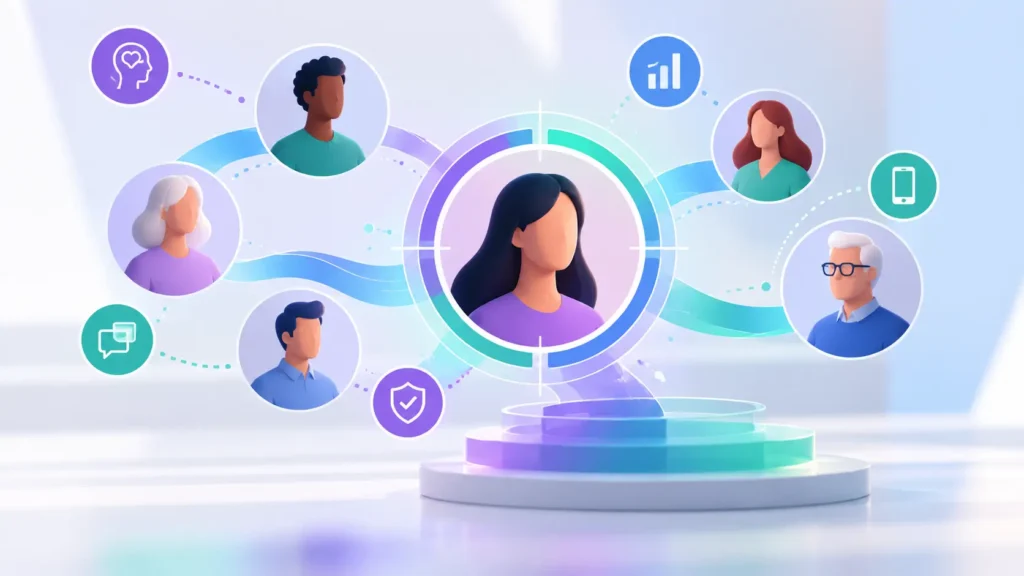
The Epic integration takes that idea another step further. Rather than requiring clinicians to move from their existing workflows into a separate AI product, OpenAI is beginning to position ChatGPT as an interface within the workflow itself.
That matters to a pharma media industry that has invested heavily in reaching clinicians precisely where clinical decisions are being made.
solli’s own Point of Care Advertising in the EHR Workflow training course examines the value of EHR environments as a way for pharmaceutical brands to reach HCPs at relevant clinical decision-making moments, using workflow placements and targeting to connect messaging with particular providers, patients and decision points.
And the commercial ecosystem around those environments continues to expand. In May, solli reported on DeepIntent’s expansion of its point-of-care media partnerships, including access to EHR-connected inventory and authenticated HCP environments.
The question raised by OpenAI’s move is therefore not just about whether AI creates another media placement, but whether it eventually changes the interface through which existing point-of-care information and media are consumed.
The Claude Science parallel
There is also a clear parallel with a trend explored by solli earlier this summer.
In a July piece, What Claude Science Means for Pharma Media, I argued that Anthropic’s launch of Claude Science was significant because it demonstrated how foundation-model companies were beginning to move deeper into specialist professional workflows rather than simply supplying general-purpose AI models for somebody else to build around. Claude Science brought scientific literature, computational tools, specialist databases and research workflows together within a single AI environment.
OpenAI’s Epic integration points in a similar direction, this time much closer to the clinician.
If AI companies increasingly control the interface through which professionals search, retrieve, synthesise and act on information, value may begin to shift away from simply owning a destination or placement and toward being part of the trusted information layer that the AI can access, understand and appropriately surface.
For pharma media, that is potentially significant.
From search visibility to AI visibility—and now workflow visibility
The change is already visible outside the EHR.
Earlier this year, another solli article highlighted research showing that generative AI is becoming a routine interface for professional HCP queries. The article raised the possibility of a growing visibility gap: If medical information is not structured for AI-driven discovery, it risks becoming harder for clinicians to find through this emerging information layer.
The Epic announcement potentially extends that issue from AI search visibility to AI workflow visibility.
Today, OpenAI’s EHR functionality is deliberately constrained. It works with authorized patient information and trusted healthcare sources, not an open ecosystem of promotional content.
But pharma media should watch what happens next.
If an HCP increasingly asks an AI assistant to identify what matters for a patient rather than manually navigating an EHR, journal, search engine or clinical website, the industry will eventually need to understand where commercial and non-commercial medical information sits within that new journey.
That could have consequences for EHR media inventory, point-of-care publishers, medical information strategies, content architecture, generative engine optimization and the value of trusted first-party clinical environments.
It could also increase the importance of the qualities highlighted in our Claude Science analysis: trusted data, identity, compliance, proprietary information and demonstrable value.
There is no immediate threat to EHR advertising, nor is there an obvious new ChatGPT media opportunity for pharma marketers. But OpenAI’s latest move provides another signal that the interface around healthcare information is changing.
For pharma media, the important question may ultimately be less “Can we advertise in ChatGPT?” and more “What happens to our media strategy when ChatGPT becomes one of the ways clinicians navigate the point of care?”