





















‘They’re Trusting Us With a Lot More’: Inside the Rise of the Pharma Media Agency
Media agencies are staring down personnel, tech and cost challenges. Yet their seat at the table has never been more secure.


This article is part of solli’s series exploring The State of the Agency.
It wasn’t long ago that the role of the pharma media agency was both narrowly defined and accepted without pushback. Clients tasked their agency partners with taking the assets handed to them by the creatives, figuring out where to run them and negotiating with publishers for the space. Many months down the road, they would resurface to share results. It was largely an exercise in blocking and tackling, to use the industry’s somewhat dismissive shorthand.
Suffice it to say that this vision of the agency’s job has evolved—and been replaced by one in which media is central to nearly every aspect of pharma commercial activity. The pharma media agency may never achieve primacy in the media/marketing mix, but it now exists as an equal partner with creative teams. Top pharma media agency teams routinely contribute to big-picture strategy sessions, decisions around data warehouse architecture and everything in between.
“You used to hear, basically, ‘I want plausible deniability in case something doesn’t work,’ which meant media people were kept at arm’s length,” explains Elizabeth Beringer, president of Real Chemistry Media. With a laugh, she adds: “Now they’re trusting us with a lot more, because they kind of have to. If you silo off media, you make everything else exponentially more difficult.”
Media teams seize the moment
Any number of factors have converged to elevate the media function within agencies. The first, unsurprising in the current do-more-with-less era of medical media and marketing, relates to measurement and accountability.
Historically, pharma brand teams looked at media as a cost rather than as an investment. Over the last half-decade, however, media entities have done a far more thorough job of quantifying client spend. They have, more methodically than creative groups, offered powerful and informed justifications for any and all outlays.
“Every single dollar we spend has to tie back to some type of return on investment,” says Melissa Gordon-Ring, global president of Omnicom Media Health. “That’s not optional anymore; there are no exceptions. But it’s something that we’re well-positioned to be able to do.”
Media groups have also benefited from AI’s effect on other agency functions. For better or worse, there’s now an expectation among clients and cost-conscious agency and network higher-ups alike that creative work can be developed less expensively using AI. Most agencies report having embraced the technology on some level in their content development.
If there’s a comparable way to fully automate traditional media functions—agent-directed buying and planning seems a heavy logistical lift, given the infrastructural changes that publishers would have to make in order to facilitate such exchanges—enthusiasm for its adoption appears low.
“I’m leery of automatic buying and completely getting rid of traders,” says Deerfield Group chief media officer Bill Veltre. “Maybe that could work someday for brands that are tech-forward and can handle the risk. But for me, I can’t in good faith put the keys to the Jeep in the hands of an AI agent.”
At the same time, those wellsprings of data might be the most powerful weapon in the media agency armamentarium.
“What’s the use of having all this data if you can’t bring it to life? That’s what we’re set up to do,” says Sheyda Karvar, EVP of media strategy at Fingerpaint Marketing.
Firms have tapped this information to better understand audiences, friction points and barriers, which in turn has turbocharged their efforts to combat fragmentation and bolster their strategic credentials.
“Understanding where audiences are, what we can say, how we can say it and in what format is a driving force to a total strategy,” notes Ray Rosti, president of Klick Media.
Speaking of that strategy, the natural tension between tactical-minded media teams and strategy groups appears to have eased somewhat. Some of that is attributable to an acknowledgement by strategy- and creative-side teams, explicit or otherwise, that pulling through a big idea in the age of social media is almost impossible without involving their media peers.
“Creative campaigns are so important, but what we’ve seen in surveys and heard from people is that they care more about whether a placement or message is relevant to them than about the beauty and look and feel of a message,” Karvar explains. “That opens the door even further for media groups.”
The people piece of the puzzle
While media leaders within the agency realm express a degree of satisfaction with their higher standing among clients, they’re not taking anything remotely resembling a victory lap. Beyond the financial pressures, they face imposing personnel challenges. To put it succinctly, there are far fewer coveted candidates than open positions.
“You look around, and it feels like everyone is always in a state of hiring,” Karvar says.
This stems back to the aforementioned characterization of media people as blockers and tacklers who are entrusted with buying and planning but largely left out of strategic conversations. That may have changed, but agency-side growth is limited by the volume of people able to navigate the expanded scope of the function. Such individuals do not grow on trees.
Indeed, agencies are moving away from media specialists, and not merely because they’re in high demand. Many organizations believe that longtime media pros may be too set in their ways to meet the current moment, too inclined to fall back on approaches that have paid dividends in the past.
“Where we struggle as an industry on the agency side is finding talent that understands that there’s a behavior change we’re looking to drive,” Veltre explains. “There are too many people conditioned just to copy and paste from one brand to the next. It can’t just be a banner ad or a point-of-care exam room billboard. There’s a mix of things that need to happen in concert.”
Leaders of internal teams have therefore broadened their searches beyond the usual suspects.
“We’re looking for analytically performance-based marketers, people who can think strategically but also put hands on keyboards and make things happen for clients,” says Justin Freid, group president of media at CMI Media Group. “You need to have plenty of people on hand who understand both the brand landscape as well as how all the channels work together to move audiences along their healthcare path.”
Karvar agrees, adding, “You need the big thinkers, but you also need the doers, because the pace and volume haven’t gone down. You can’t have people on your team who think they’re above it all. You’re expected to work up, down and sideways.”
That expectation opens the door to more early- and mid-career people willing to fully commit themselves to glamorous assignments and gruntwork alike. When Karvar’s team at Fingerpaint started to bulk up its media offering—it numbered just three people when she joined the company in early 2019—it focused its attention on up-and-comers rather than established stars.
“We needed people to do the work,” she recalls. “At the time, you saw a lot of companies hiring a big name and then building out a team under them. We didn’t have the time for that.”
Agencies now find themselves having to make time for career development. This comes in many forms: giving people opportunities to up their industry profile by speaking at events; exposing them to different therapeutic categories or internal functions; and enrolling them in leadership or management training.
In so doing, agencies are sending a message: The people already under their roofs are more important to the cause than the ones currently sheltered elsewhere.
“We’re looking to cross-skill the people we already have and evolve them into holistic planners,” Freid says. “It’s a priority for us. It should be a priority for everyone.”
Klick’s media group, for one, has taken to staging bespoke media innovation days, featuring working sessions that bring together clients, tech partners and members of the agency’s media team.
“It’s about having the right conversations on where [clients] are trying to take their business,” Rosti explains. “Where are you trying to get to? What are the problems you’re trying to solve? What are the things you wish your media was doing better?”
Beringer’s team at Real Chemistry has taken a similar tack, holding regularly scheduled “Nerdy Trainings” designed to familiarize all comers with the nuances of modern-day health media. She believes that such informal get-togethers raise the collective knowledge base while goosing enthusiasm for all things media and hopes that in-house leaders will avail themselves of similar offerings: “My favorite clients are the ones where the C-suite takes the time to learn.”
Client confidential
Another top concern for agency leaders is how clients have upped their demands on their agency partners, and not just around cost.
“They want to know how we’re training and challenging our people in a way that drives growth and optimism and excitement for different types of projects,” Gordon-Ring says, adding that she doesn’t blame them for asking.
Meanwhile, client teams are evolving at an even more rapid pace than agency ones, particularly in the way many big pharma companies deploy their people. Ten years ago, brand-side leaders sat in their roles for years. Nowadays, they’re just as likely to be rotated into different groups or functions after 18 months. This has lent an air of urgency and uncertainty to client-agency relationships.
Compounding these challenges is the stubborn reality that different clients have a wide range of ideas about media’s utility, as well as about what agency-side teams bring to the table.
“There’s still some misperception around what media is and what it can or can’t provide,” Veltre acknowledges. “You hear, ‘I’m spending all this money, it should drive all the value for my brand.’ They’re expecting some hockey-stick growth curve that doesn’t exist.”
Finally, agencies remain very much attuned to the threat of pharma companies’ in-housing their media operations. Client-side centers of excellence at Bayer (the first to move to this model) and Novartis earn high marks for their approach, despite the dialing back of agency relationships that inevitably accompanies it.
“There’s definitely been more effort to create that internal center of excellence,” Freid says, but with a caveat: “You still sometimes hear, ‘Just go get my media.’ Nobody does it the same way.”
The road ahead
This lack of predictability both worries and delights agency media leaders. Gordon-Ring likens the current climate, and its all-AI-all-the-time buzz, to the era decades ago when search first arrived. She expects pharma media to experience a similar upheaval in its wake.
“There are so many different permutations now of what media is. … People are fighting to have a seat at the table whether they understand it or not,” she notes. “The experts in the room today are not the experts in the room from five years ago, and they won’t be the experts in the room five years from now.”
Further clouding the pharma media crystal ball is the tsunami of change in the way people consume media. Instead of searching, they’re increasingly having conversations with LLMs. This puts agency media teams in a tricky place: They need to make sure they’re accommodating consumer preferences while at the same time maintaining strong partnerships with publishers rife with digital inventory.
That said, leaders of agency media functions aren’t wilting in the face of these pressures. After all, the days when they had to grapple for resources and attention aren’t too distant in the rearview mirror. They’re uniformly optimistic about the path ahead, even as they worry about the forces that will propel them down it.
Veltre derives much of his optimism from what he calls “the GLP-1 effect,” which he believes “is very, very real. The blockbuster mentality those drugs created has untapped another surge in media like we saw years ago with Humira. Everybody wants to be that big.”
Beringer, on the other hand, pins her hope on the industrywide spirits of innovation and experimentation: “You have to be super-committed to the idea of innovating in the space. That’s table stakes for agencies nowadays,” she says.
To that end, newly minted graduates should arrive in the agency world far more sophisticated in their use of AI and other nascent technologies than the generation that preceded them. Look for bidding wars over candidates able to use technology to answer business questions as well as comprehend and quickly process what the machines are telling them.
“Your job isn’t going anywhere, but that job is going to have a different description a year from now,” Karvar predicts.
In other words, the pharma agency media boom likely has plenty of life left in it.
“These trends of personalization and timeliness of content and cutting through the clutter, they’re not going to go away anytime soon,” Karvar continues. “Media agencies have a responsibility to understand these behaviors and preferences and motivators, and show up where it counts with content that matters. I think we’re up to the challenge.”
For more on The State of the Agency, click here.
Related solli Training Course:
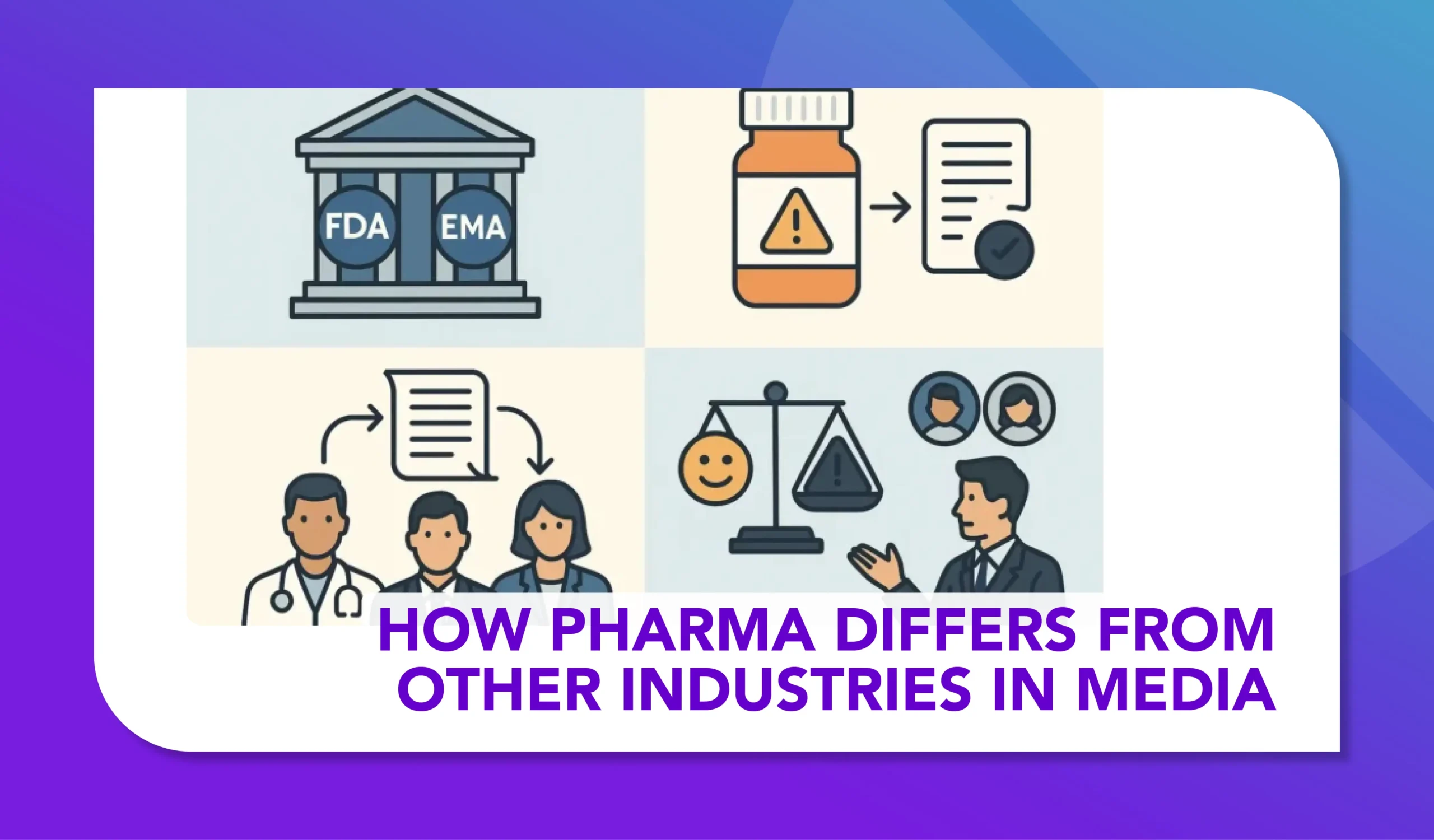
Interested in learning more about pharma media’s position in the broader media and marketing industry? Dive even deeper with this training course on the unique factors at play in pharma media.