











Pharma Media in Cannes 2026
Reflections from the leaders shaping the future of healthcare marketing.
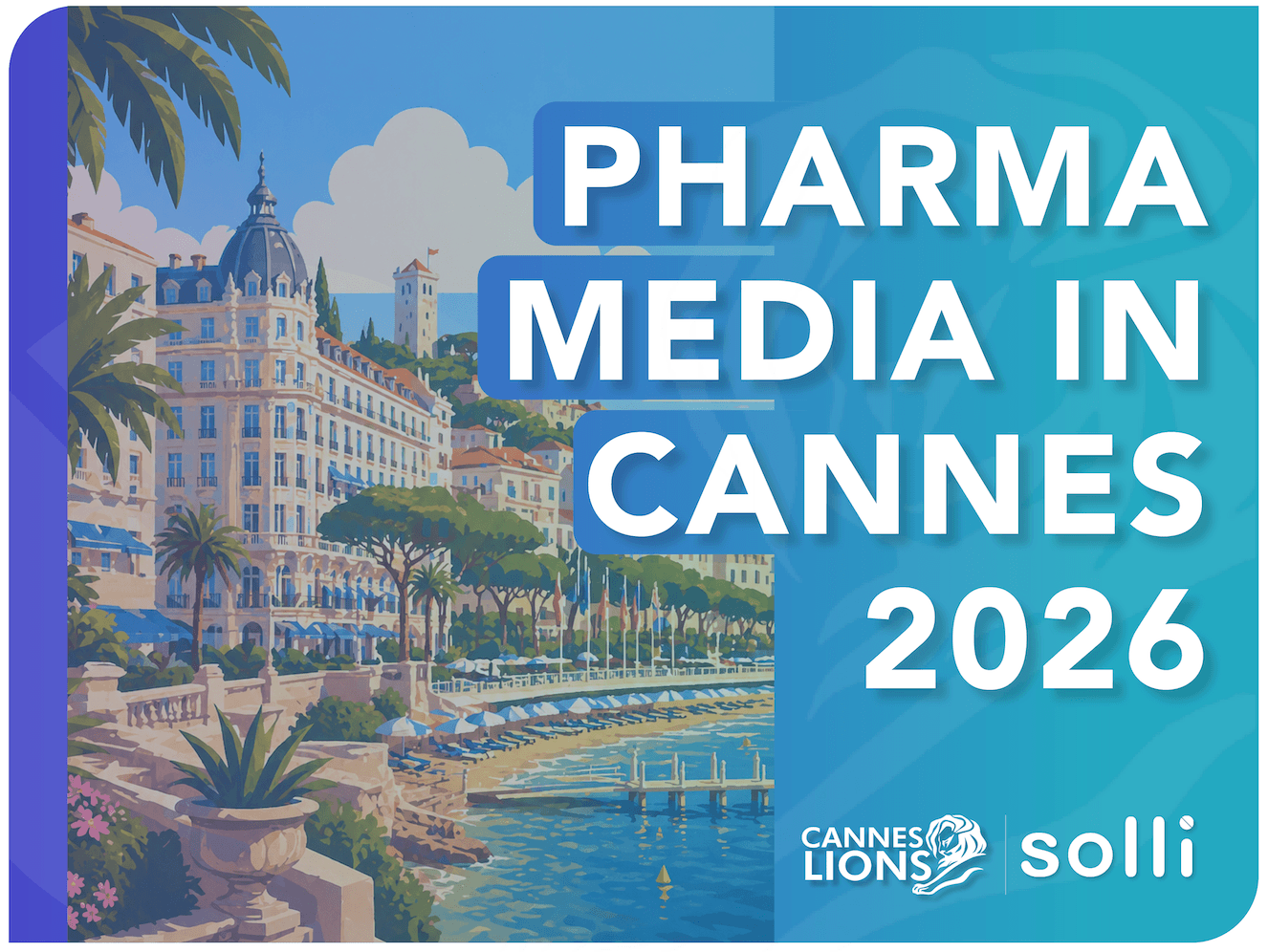
Cannes may have wrapped up, but its biggest conversations are only just beginning.
Each year, the Cannes Lions International Festival of Creativity offers a glimpse into where marketing is headed. In 2026, one message became increasingly clear: healthcare is no longer simply adopting marketing innovation – it is helping shape where it goes next.
Across beach stages, roundtables, rooftop conversations and late-night networking, pharma media leaders explored how artificial intelligence, data, creativity and trust are reshaping the way brands connect with patients and healthcare professionals. The focus has shifted from experimentation to execution, from campaigns to continuous engagement, and from media metrics to meaningful outcomes.
Through Pharma Media in Cannes 2026, we’ve brought together reflections from the leaders who experienced it first-hand. Their perspectives capture the ideas, debates and defining moments that are already influencing the next chapter of healthcare marketing.

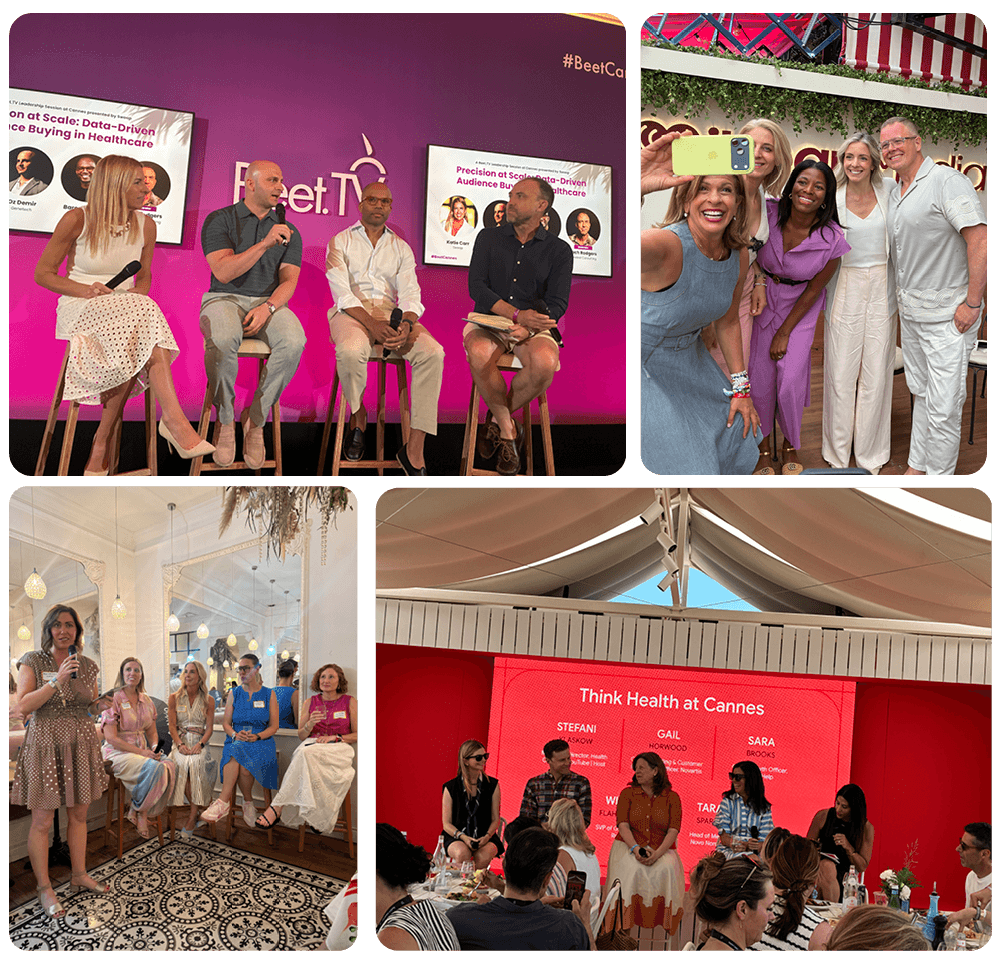
Record heat, big ideas, one message: the era of broadcasting at people is over. The conversations that mattered were about earning attention, building trust, and showing up with relevance.
On the AI front, the mood was pragmatic. Answer engines are fast but lack recency and nuance – and audiences already know it. Oz Demir, Genentech highlighted that site traffic is up, not down, as people seek to verify what AI tells them. One speaker predicted that in 5 years 40% of media work will be automated, 40% augmented, and the 20% remaining fully human will be harder – requiring deep strategic thinking and emotional investment.
In an iHeart Media panel, Malcolm Gladwell reiterated: trust isn’t built on facts, it’s built on shared values. Healthcare trust was above 90% when medicine was arguably worse. Now it’s at 50%. Claims of “better, faster, cheaper” don’t move people. Connection does.
That theme ran everywhere. Zoe Lazarre, Genentech and Hoda Kotb shared that vulnerability creates connection, perfection repels it. Audiences want to be in something together. The implication for health brands: patients don’t want to feel like patients. They want to feel like empowered consumers making informed choices.
For marketers, the operational shift is just as real. De-silo your briefs. Stop thinking in campaigns and start thinking in always-on presence. The Think Health session at Google Beach highlighted just this. Creators are becoming talent; brands are becoming publishers. DJ Khaled’s partnership with Wegovy for a Super Bowl spot and a “scrappy” Snapchat the morning after, showcases how brands can play in culture and continue momentum
The pride this industry takes in genuinely helping patients was unmistakable all week. The best work here isn’t about selling. It’s about solving.

Cannes Lions was HOT this week and I don’t just mean the temperature!
After spending the week speaking with leaders across pharma, retail media, agencies, and technology, one theme stood out above all others: healthcare marketing is becoming far more dynamic, intelligent, and outcomes-focused. Privacy by design and connected data are enabling this pharma media evolution.
AI was part of nearly every conversation, but not as a replacement for marketers or clinicians. Instead, it enables faster audience development, deeper journey orchestration, and near real-time optimization using first-party data and other privacy-safe real world data signals. The focus is shifting away from static audience segments toward understanding where someone is in their health journey and delivering information that’s relevant in that moment.
Just as importantly, trust came up again and again. As more consumers turn to LLMs and AI tools for health information, brands have an opportunity and a responsibility to be the trusted source people come back to for validation. The LLM isn’t the only part of the process that requires training. The same way that advertisers learned to “train” for SEO, now they must “train” their content for how it appears when someone asks ChatGPT or Claude about their therapy/condition.
Another clear takeaway was that success can no longer be measured by media metrics alone. The conversation has moved toward business outcomes, health outcomes, and understanding how every channel works together to influence behavior over time.
Healthcare marketing is evolving quickly, but the organizations that succeed will be the ones that embrace new technology without losing sight of the people they’re ultimately trying to serve.

DeepIntent at Cannes Lions 2026: What Healthcare Advertising Needs to Get Right
Three themes surfaced again and again across the panels, conversations, and lunches at Cannes Lions this year. Together, they paint a clear picture of where healthcare advertising is headed.
Trust is the foundation. The question wasn’t whether AI belongs in healthcare campaigns but how to scale automation without losing the credibility the industry depends on. From audience targeting to creative delivery, the consensus was clear: AI only works in healthcare when it earns trust at every step.
Speed is accelerating. In just the six months since CES, the industry moved from AI as concept to AI as proof-of-concept to AI driving real, early-stage value at scale. The change is happening now, and the brands and platforms that adapt fastest will define the next era of healthcare marketing.
Intelligence is being redefined. AI has become a way to reveal brand-new opportunities. That shift was reflected across discussions about what defines premium media, how omnichannel strategies should be orchestrated, and why transparency and measurable outcomes matter more than ever. The goal is to eliminate the manual work that slows down human expertise, giving marketers more time to focus on strategy. Solutions like Helix AI are helping make that possible by turning complex data into clarity and faster, better decisions.
Healthcare advertising has always demanded a higher standard. AI is finally rising to meet it.

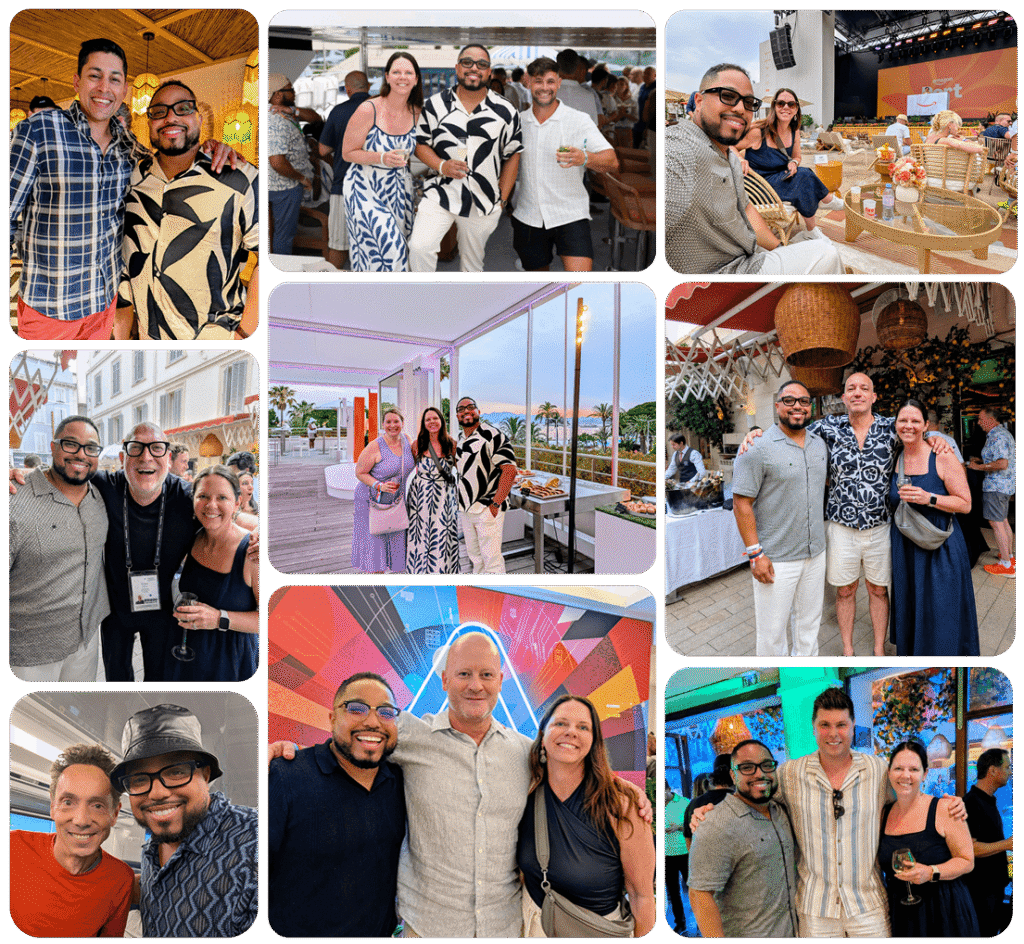
At an event built around global brands and massive audiences, many of our healthcare conversations kept returning to specificity.
Healthcare has always been a niche business pretending to be a mass market.
And as the saying goes, the riches are in the niches.
One of my favorite moments of the week happened over coffee with an agency partner discussing a question that comes up often in healthcare marketing: how do you distinguish between a physician learning about a therapy area and one actively preparing to change behavior?
Nobody at the table was asking for more data.
They were asking for a better understanding of moments of engagement and a way to move across channels without losing the context, privacy, and trust that make those moments meaningful in the first place.
That conversation also changed the way I think about omnichannel.
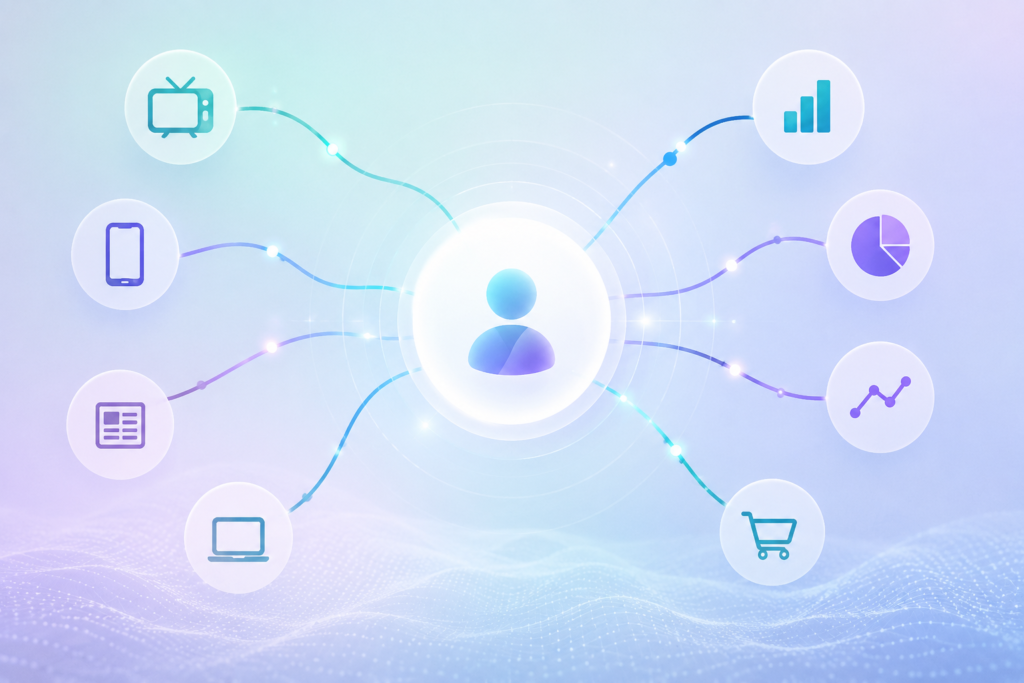
For years, omnichannel has largely meant distribution. Increasingly, it feels more like continuity. The ability to connect experiences, insights, and learning moments in ways that respect both patients and healthcare professionals.
Within that framework, privacy, security, and compliance become design principles rather than constraints. At HLD, they’re foundational to how we think about trusted engagement from the very beginning.
And perhaps that’s what people mean when they say the riches are in the niches. The work gets better when we go deeper into specialties, communities, and the contexts that make each of them unique.

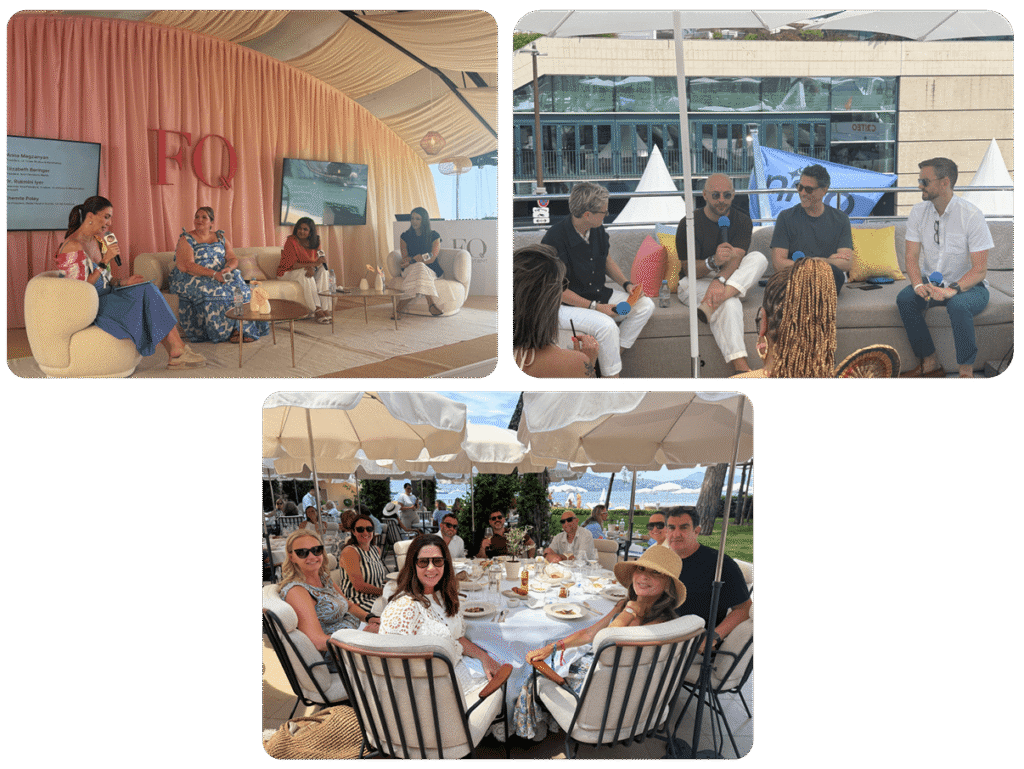
Industry giants descended upon Cannes this past week to celebrate Cannes Lions. As always, the health tech space brought the heat and a full on heat wave to the south of France. Here are some of my key takeaways:
AI AI AI. To no one’s surprise, you couldn’t walk two feet without AI hitting you in the face. Female Quotient hosted a panel with Real Chemistry Media, LA Times Studios, LG Ad Solutions, and Microsoft, which featured futurists talking about AI’s impact on media consumption, creativity, personalization, and automation. The key takeaway for me? Health tech is still looking for the perfect balance between efficiency and authenticity.
HCPs In The Wild. Live sports. Celebrity gossip. Gaming. Our industry continues to push the limit on reaching HCPs beyond traditional clinical environments. This is made possible by the data and tech. Mediaocean hosted Unity, Butler/Till, and PulsePoint to talk specifically about gaming. The takeaway was that doctors are playing games in their downtime and brands have a real opportunity to meet them here. Early data from these pharma campaigns are showing unmatched video completion rates of 40-50%.
Oh, and, importantly: Major shout out to Publicis and Novartis for winning the Grand Prix and Silver Lion for its prostate cancer screening project, “Relax Your Tight End.”

Set against the stunning French Riviera, Cannes transforms into the global stage for marketing, AdTech, creativity, and healthcare. From dining at Le Môme and La Guérite, to the LVMH private villa, sunset views from the Expedia rooftop, late nights at The Carlton, World Cup matches, yacht excursions to St. Tropez, and dancing to Tiësto and Sofi Tukker, my week representing Swoop blended business, thought leadership, and an unbeatable social calendar.
Across sessions hosted by Beet.TV, The Trade Desk, Brand Innovators, Haymarket, it’s clear: healthcare belongs on the main stage.
Healthcare’s focus on privacy, compliance, and trust positions it ahead of other industries. While other sectors are now wrestling with governance and responsible data and AI usage, healthcare has spent years building the infrastructure required to operate responsibly.
I was inspired by Lilly’s brand transformation and philosophy of seeing the person behind the prescription resonated deeply. Their commitment to a clear brand truth, putting patients at the center of decision-making, and improving access through innovations like Lilly Direct demonstrates how brand purpose drives meaningful business transformation.
AI dominated nearly every conversation. Healthcare marketers must now think about discoverability within AI platforms, the quality of information being surfaced, and how brands remain trusted sources in an increasingly AI-driven world. Increasingly, patients are turning to large language models to understand symptoms, treatments, and brands.
After a week of conversations, one conclusion feels clear: the future of healthcare marketing will be more intelligent, more connected, more personalized, and more accountable than ever before.

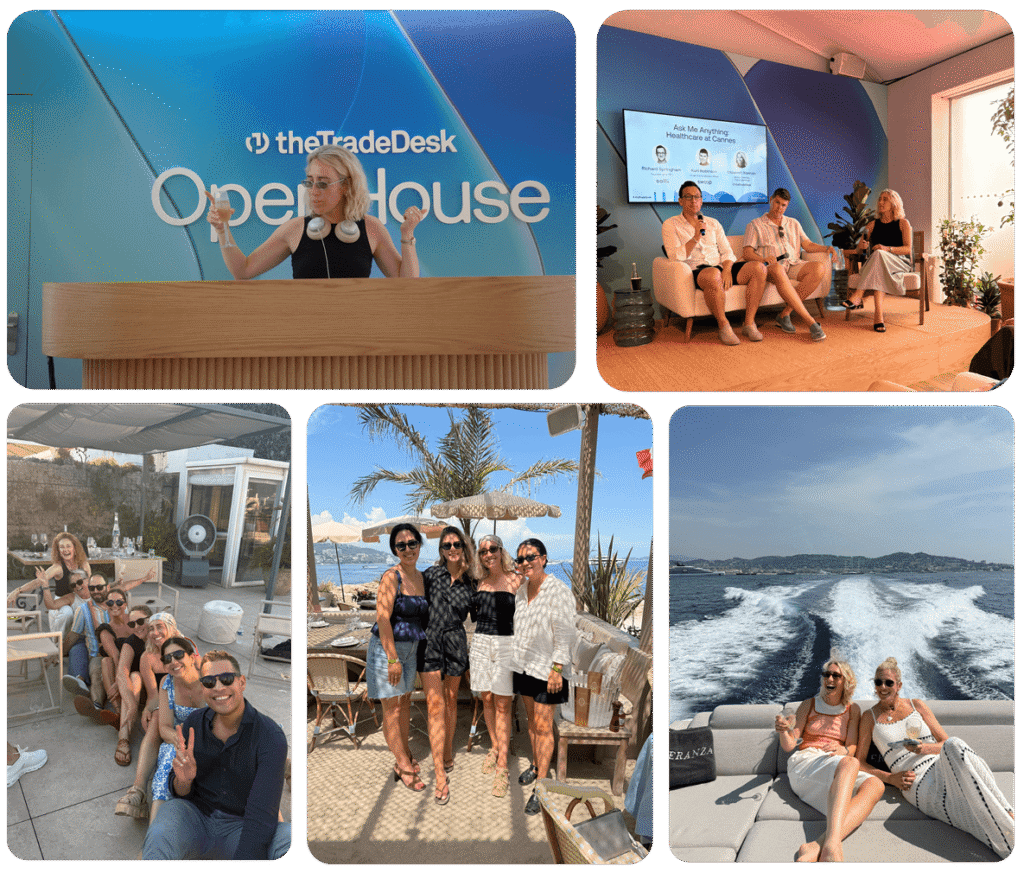
This year’s Cannes Lions could easily be summarized with a list of buzzwords: AI, LLMs, personalization, omnichannel, data signals, and GLP-1s.
AI dominated nearly every panel and conversation throughout the week. But the discussion wasn’t really about AI itself. It was a reminder that AI is a force multiplier, not the finish line. Its true value isn’t measured by how much it can automate, but by how it helps us transform signals into meaningful action, fuel creativity, and create better experiences and outcomes for the patients and physicians we serve.
And yet, the most valuable takeaway wasn’t any one technology or trend. It was the opportunity to bring people together to challenge ideas, share perspectives, and have thoughtful conversations about the future of healthcare. Those conversations challenged many of healthcare marketing’s long-held assumptions and reinforced that innovation doesn’t happen in isolation. It happens when diverse perspectives come together to question, debate, and build what’s next.
I had the opportunity to experience that firsthand by speaking at our Healthcare in Focus event. The best part wasn’t presenting, it was what happened afterward. Leaders from across the healthcare ecosystem openly challenged one another’s thinking, debated different perspectives, and explored where our industry is headed. Later that evening, DJing our happy hour was a reminder that some of the strongest professional relationships are built outside the conference room, where music creates space for conversation, new ideas, and unexpected connections.
Between strolling the Croisette, a little shopping between meetings, long lunches overlooking the Mediterranean, dinners that evolved into conversations about the future of healthcare, early morning swims in the sea, and miles of walking that left my feet exhausted, I realized the most valuable signal from Cannes wasn’t generated by AI at all.
It came from bringing smart, curious people together to collaborate, challenge one another’s thinking. I can’t wait to see where these conversations take us next!

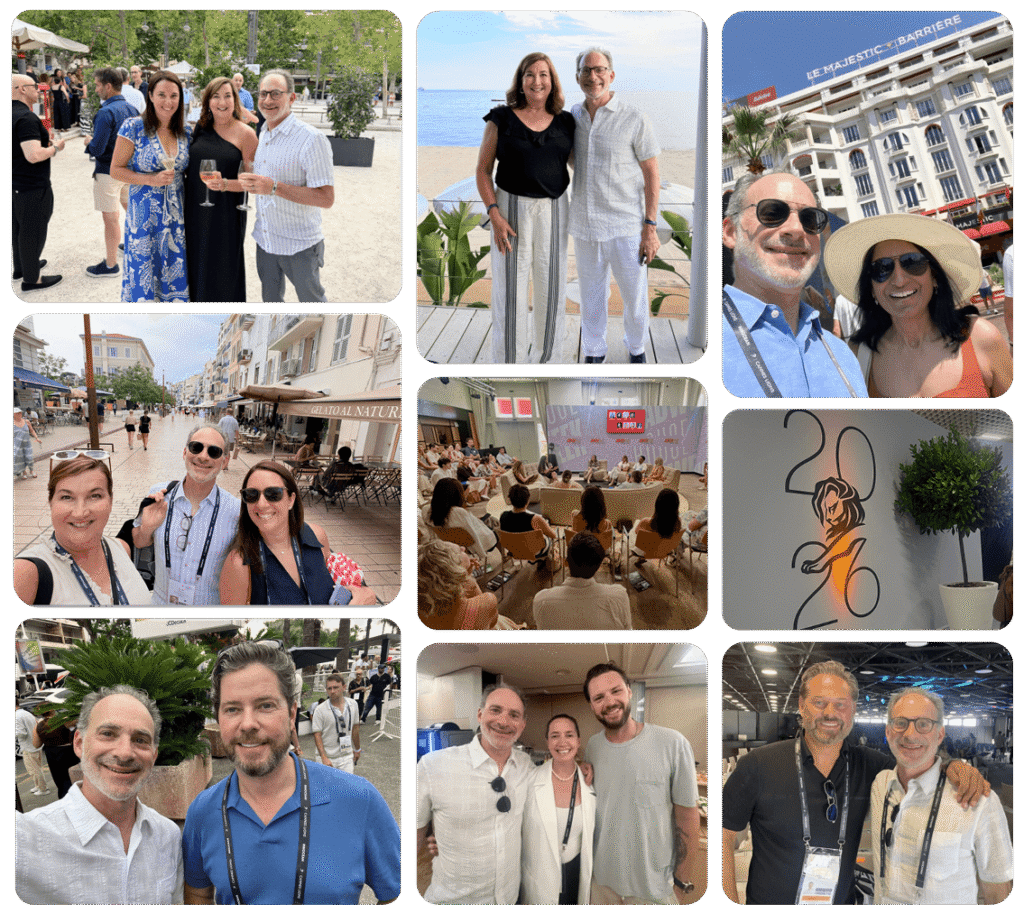
Day one:
A few quick thoughts from Day 1 at #CannesLions. At each of the pharma talks I attended (with execs from Lilly, Novartis, Novo Nordisk and more), the focus shifted from illness to wellness. Instead of only talking to patients through their disease, brands are using language closer to the way people actually talk. (Case in point, the Novartis Grand Prix winner)
AI is in every conversation of course with 1.5B prompts per day and agencies and brand companies demanding their staff quickly get on board. The pushback is everywhere as well with pleas (from Pantone and Pinterest, eg.) to preserve our humanity, balancing presence and progress. ‘AI cannot experience time or feel’’ was one poignant thought I noted.
And finally, 28 years(!!) after my experience with the launch of Viagra, Ogilvy Shanghai won a Gold Lion in the Pharma Lions category for the “Viagra Blue Brands” campaign.
Maybe AI can’t experience time, but after a very full day and night at Cannes and many years in healthcare, I certainly can.
Day two:
Day two at Cannes Lions 2026 was a full one with Stagwell SportBeach, Omnicom, Beet.TV, Solomon, and a super relevant conversation to PatientPoint: a panel on the future of omnichannel healthcare marketing.
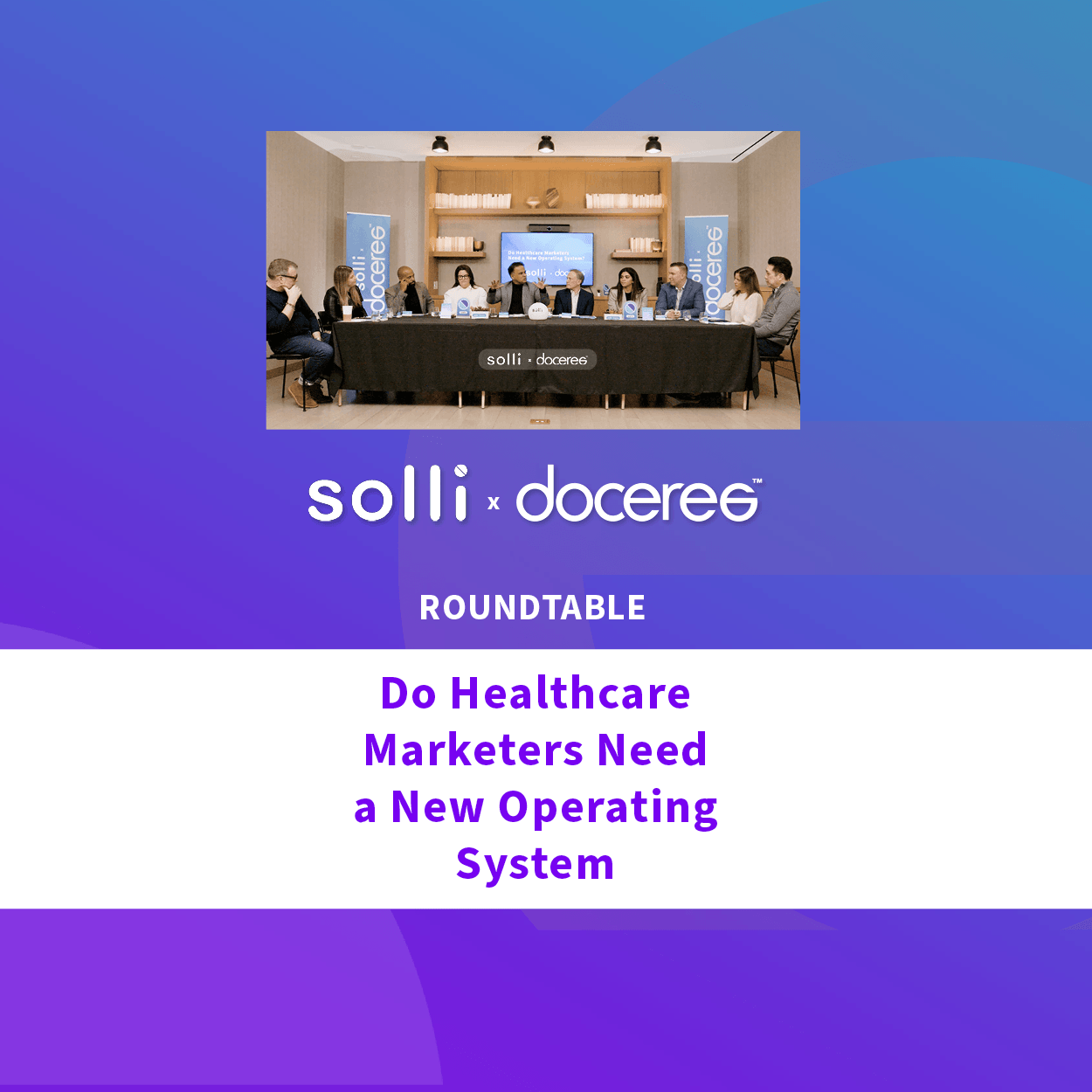
Execs from Doceree, Real Chemistry, Novo Nordisk, Good Apple, Digitas Health and PHM discussed the tension around annual brand planning vs. a world that doesn’t stand still. Physicians and patients move in and out of segments throughout their healthcare journey before, during and between appointments. But budgets and brand teams are often siloed, with HCP on one side and DTC on the other. We were excited when the panel agreed that point of care is almost by definition where the doctor and patient journeys converge — in the same room, at the same moment.
The linear TV-first brief was also being questioned in several pharma-related panels. For decades, pharma built for the :60 or :30 DTC spot and adapted other channels around it. We heard that this is finally changing. Ideally, the creative brief should be built for all channels from the start (including creative assets that take advantage of the contextual relevance of the doctor’s office).
Healthcare marketing and media are more complex than ever. But the logical convergence at the point of care has been there all along.

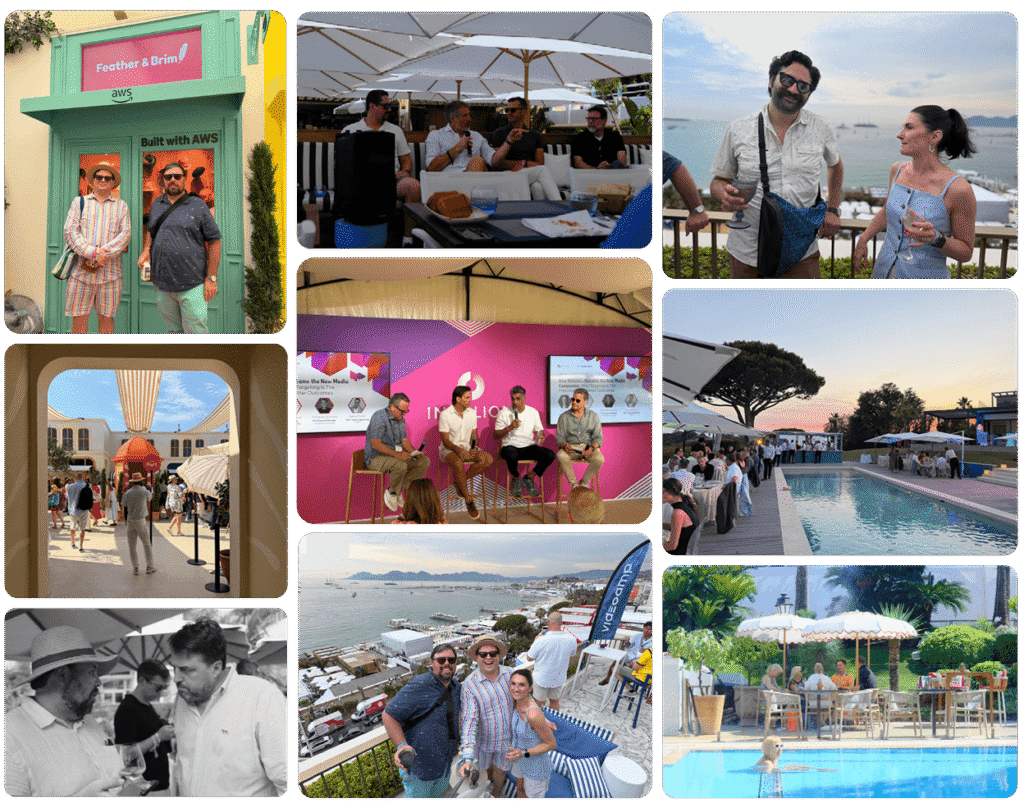
Cannes 2026 was, in one way or another, about outcomes. In the all consuming domain of AI, the atmosphere is still hyperbolic but mature enough to be making real demands of its investment. A reverse JFK if you will, “Ask not what your enterprise can be doing to embrace AI, but what AI is able to deliver for your enterprise!” From CMOs lips I heard this expressed as needing metrics to show how it helps growth, not just the cost savings that have long been trumpeted.
Amazon’s marketers put it quite pithily in the print magazine distributed in their port, with a section on the “myths of AI” noting the dichotomy of quantity vs quality does not hold true with the latest AI. This was born out in one of their creative venues where you could use their ai to generate a full creative marketing campaign for an invented company, based off a single sentence prompt, with credible looking set of ads optimized to run against most of Amazon’s inventory in a few short minutes.
While impressive it was not enough to inspire me to leave PurpleLab to pursue my prompt, a hat store for pet birds. The implication though, that we are ever closer to micro segmented content creation, is highly compelling even if our verticals MLR processes mean it may lag a bit. Outcomes are coming for the frontier AI labs, in the form of OpenAI beginning to show interest in making revenue, debuting more about their ad strategy here, though amusingly their initial offerings are focused on brand awareness plays.
In TV land, OpenAP debuted a conversion tool allowing pooled measurement across a wide range of tv platforms, again allowing the combination of vast sums of media against conversion data, we’re buying on outcomes in TV land now!
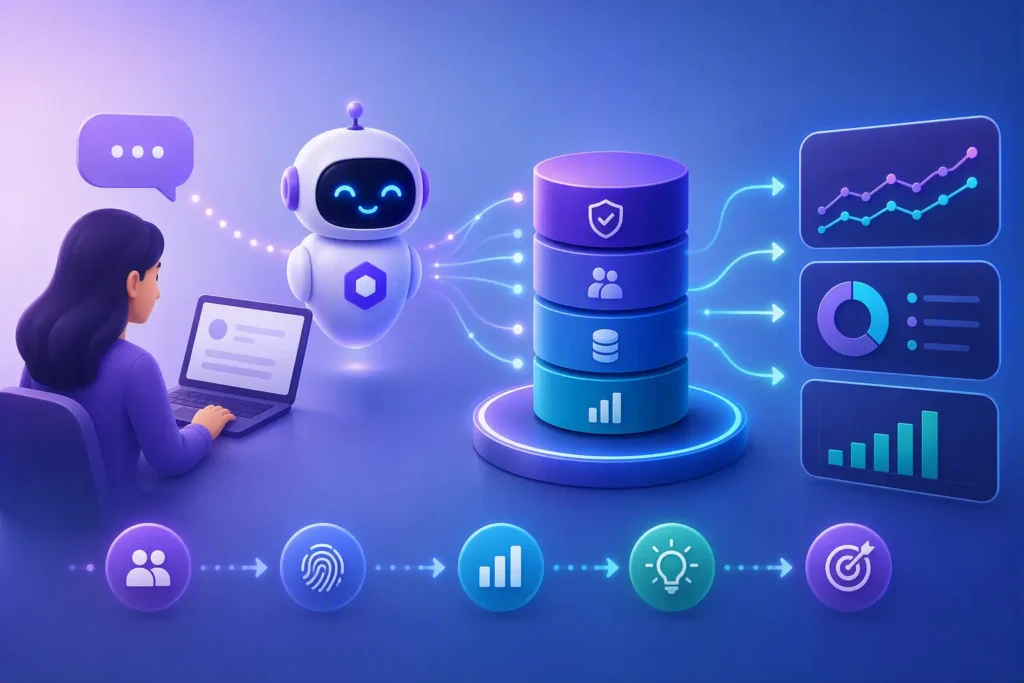
The prime takeaway for pharma marketers though was how all the media buyers and agencies that support them are implementing agentic frameworks to tie data together more easily, connecting media to conversions of all definitions, and allowing marketers to use conversational interfaces to get real outcomes statements from that combined data in ways that would have taken months optimistically before.
As a data jockey, I’m excited to see so much more of my less technical counterparts able to get into the saddle and learn what’s really working!

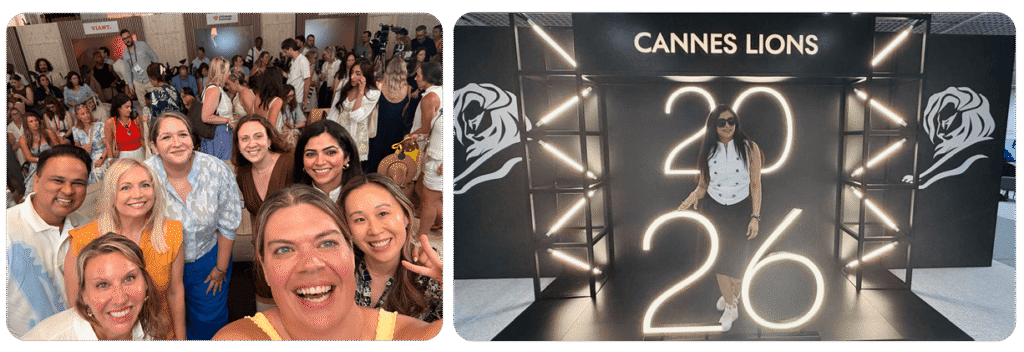
Cannes 2026 wasn’t about what happened on stage. It was about what changed off it.
Some weeks fill your calendar. Others reshape your thinking. Cannes Lions 2026 was the latter.
Across the Croisette, one message echoed through every keynote and conversation: the future belongs to brands that can think, learn and adapt in real time. From AI’s next frontier to creativity as a growth engine, industry leaders made one thing clear—static marketing is giving way to dynamic intelligence.
That made this year’s Cannes especially meaningful for Doceree.
At Cannes Lions, we unveiled Doceree DOOH—the first truly addressable digital out-of-home advertising solution for healthcare, powered by patient check-in. For the first time, digital screens in medical environments can respond to clinical intent in real time, delivering contextually relevant messaging when it matters most. More than a new media channel, it’s a new model for intelligent healthcare engagement.
The conversations that followed reinforced the industry’s direction. Across panel discussions and industry events, healthcare and media leaders agreed that omnichannel must evolve from an operational framework into a creative advantage. Further conversations also challenged an even bigger assumption: annual marketing plans are no longer fit for an industry driven by real-time data, physician behaviour and patient needs.
The strongest takeaways, however, happened between sessions—in candid conversations with agencies, pharma marketers and partners who are redefining healthcare marketing together.
Cannes 2026 confirmed what we have long believed: the future belongs to adaptive, intelligent and human-centric experiences. At Doceree, we’re not waiting for that future—we’re building it.

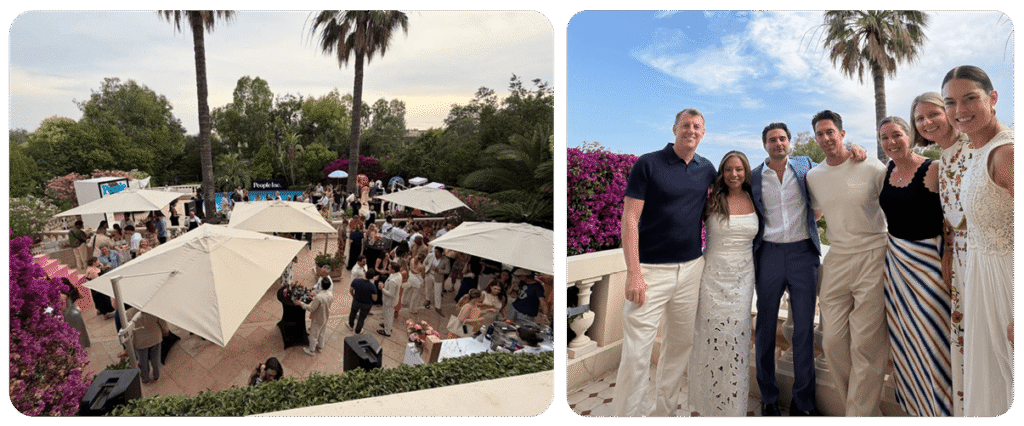
Postcards from Cannes: The Future Doesn’t Wait
The energy here is hard to describe until you’re in it. Every conversation, every terrace, every impromptu meeting between sessions carries the same undercurrent: things are moving fast and nobody is slowing down.
What’s driving that speed isn’t just technology. It’s people. Consumers and HCPs are engaging with information differently, making decisions faster, and moving on even faster than that. Which creates a real tension: strategies get built while audiences are already on to the next thing. They aren’t waiting. Behavior shifts. Needs evolve. By the time a plan is locked, the audience may have already moved. The real question isn’t just how we reach people. It’s how we stay current with who they are.
For those of us in health and pharma, that’s not abstract. The way people find and engage with health information has fundamentally shifted. Health is everywhere now, and so are the people looking for guidance. What’s interesting is that the conversations are converging. Patients are getting smarter, researching more, and showing up to appointments with real knowledge. HCPs are living in the same cultural moment, exposed to the same consumer content as their patients. The gap between those two audiences is closing. The opportunity has never been bigger. Neither has the pressure to show up in the right place, in the right way, at the right moment.
That’s exactly why a week like this matters. The best thinking isn’t happening in a silo. It’s here, shared across industries and perspectives.
The future isn’t coming. It’s already here on the Croisette.

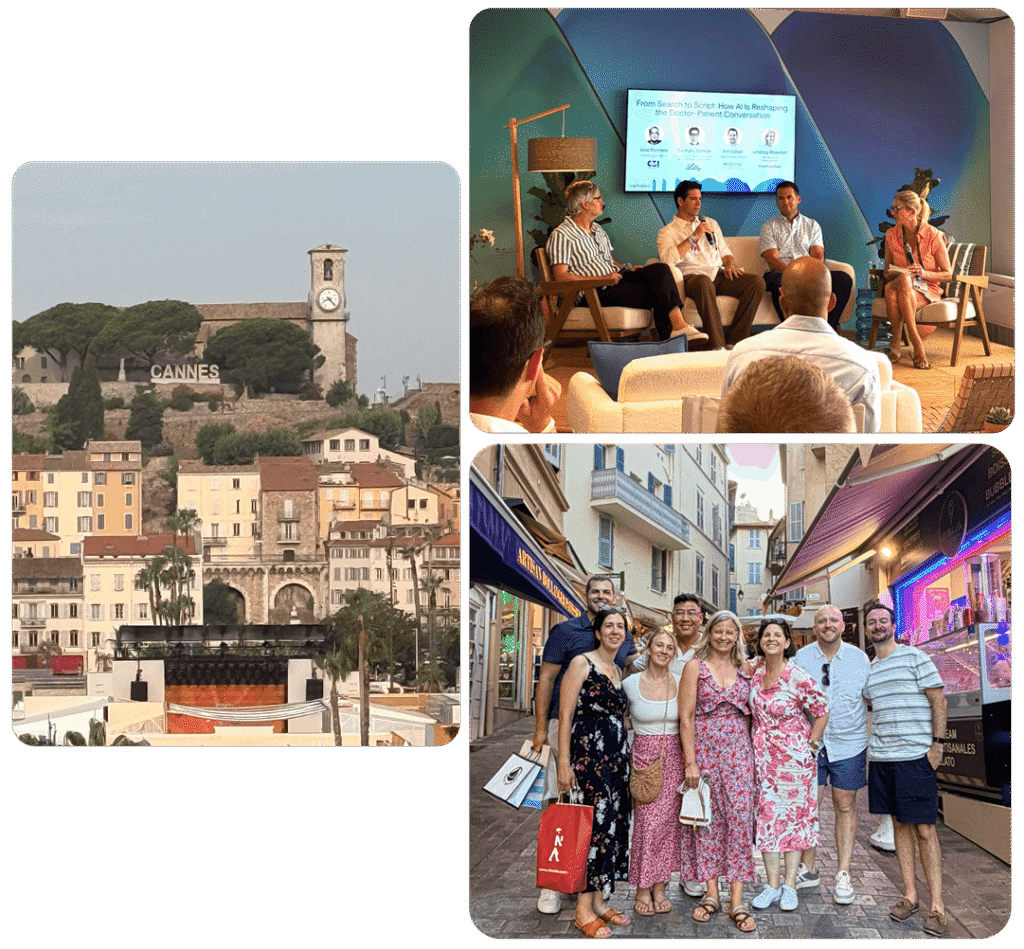
Another year at Cannes, with this one as my first with IQVIA Digital. I am always impressed with the quality of our interactions, with mutually undivided attention to focus on major opportunities that will re-shape healthcare marketing.
Throughout our meetings, dinners, and panels, I ended up in more conversations about consumer/patient facing AI than I expected, with a focus on how emerging DTC ad experiences in large language models will create new media opportunities.
To borrow from Spiderman, with great power comes great responsibility
Training LLM’s on the wrong health information poses significant challenges to consumer safety, trust in those environments, and willingness for partners to invest
What do we solve for in the next 3 months post-Cannes?
-
- How do we help our partners train on verified clinical data to build platforms that improve patient’s lives, embrace personalization, and drive better outcomes?
-
- How does the creative experience evolve: we should go beyond the banner to embrace the intent of the search
-
- How do we keep trusted health publishers incentivized through shared monetization?
I am excited to tackle these challenges. Thank you, solli, for the opportunity to capture a piece of my Cannes experience!

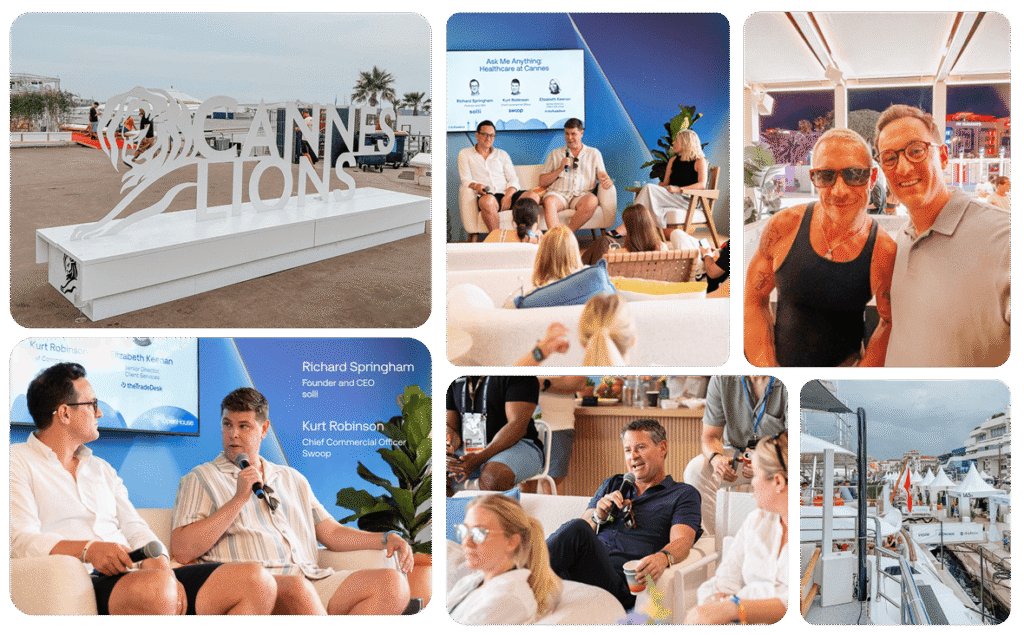 A standout week for solli at Cannes Lions International Festival of Creativity offered several clear takeaways. Pharma had a more visible presence this year, but it remains a relatively small part of the broader creativity conversation, highlighting significant opportunity for the sector in the years ahead. Across discussions, the recurring themes were trust, measurement and human empathy, with AI running as a consistent thread throughout. The week also reinforced the value of in-person connection: even with a packed schedule, many of the most valuable conversations happened spontaneously. From major global brand investment to smart, creative activations, Cannes once again demonstrated the power of bold ideas, thoughtful engagement and meaningful industry collaboration.
Looking Ahead…
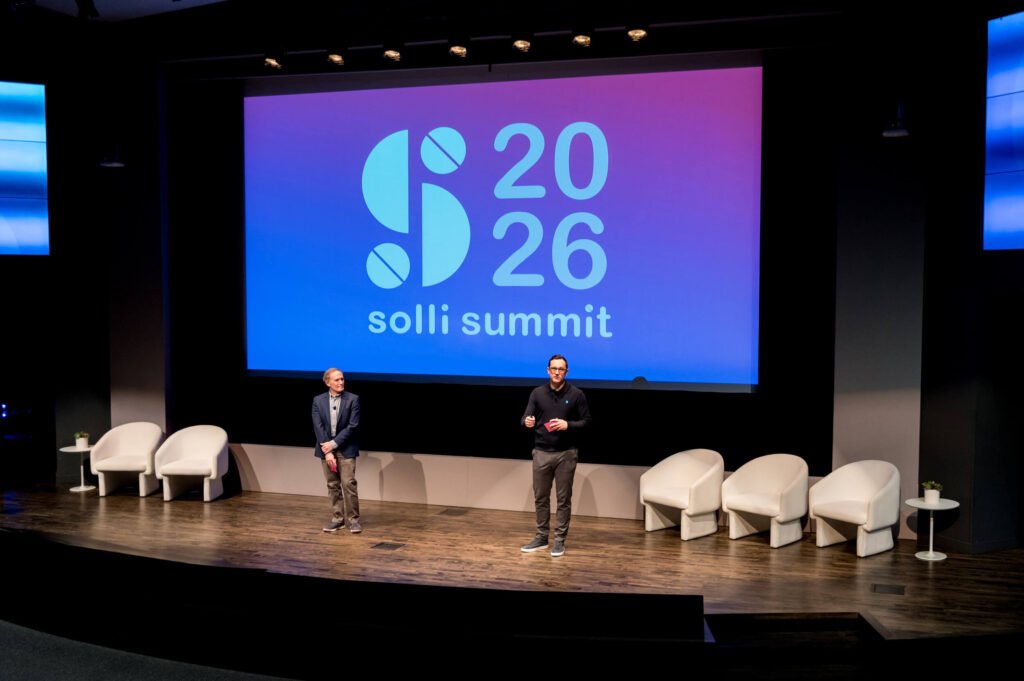
At solli, our mission is to elevate the practice of media within pharma. That is why we created Pharma Media in Cannes 2026: to bring together first-hand reflections from the leaders shaping the conversations and share back with the wider industry.
The conversations throughout the week made it clear that success will no longer be defined by adopting the latest technology alone, but by how effectively organisations combine intelligence with creativity, data with trust, and innovation with real-world impact. Whether discussing AI, omnichannel engagement, measurement, privacy or patient experience, one principle remained constant: better outcomes begin with a deeper understanding of people.
The reflections shared throughout Pharma Media in Cannes 2026 highlight an industry that is evolving rapidly while remaining grounded in its purpose – to improve the way healthcare information reaches the people who need it most.
Thank you to all of our contributors for sharing their experiences, insights and perspectives. We look forward to continuing these conversations, and seeing where they lead at Cannes Lions 2027.