




















Health and Pharma Brands Go for Consumer Engagement Goal With World Cup Campaigns
Pharma spots have so far made up nearly 5% of all World Cup ad airings.

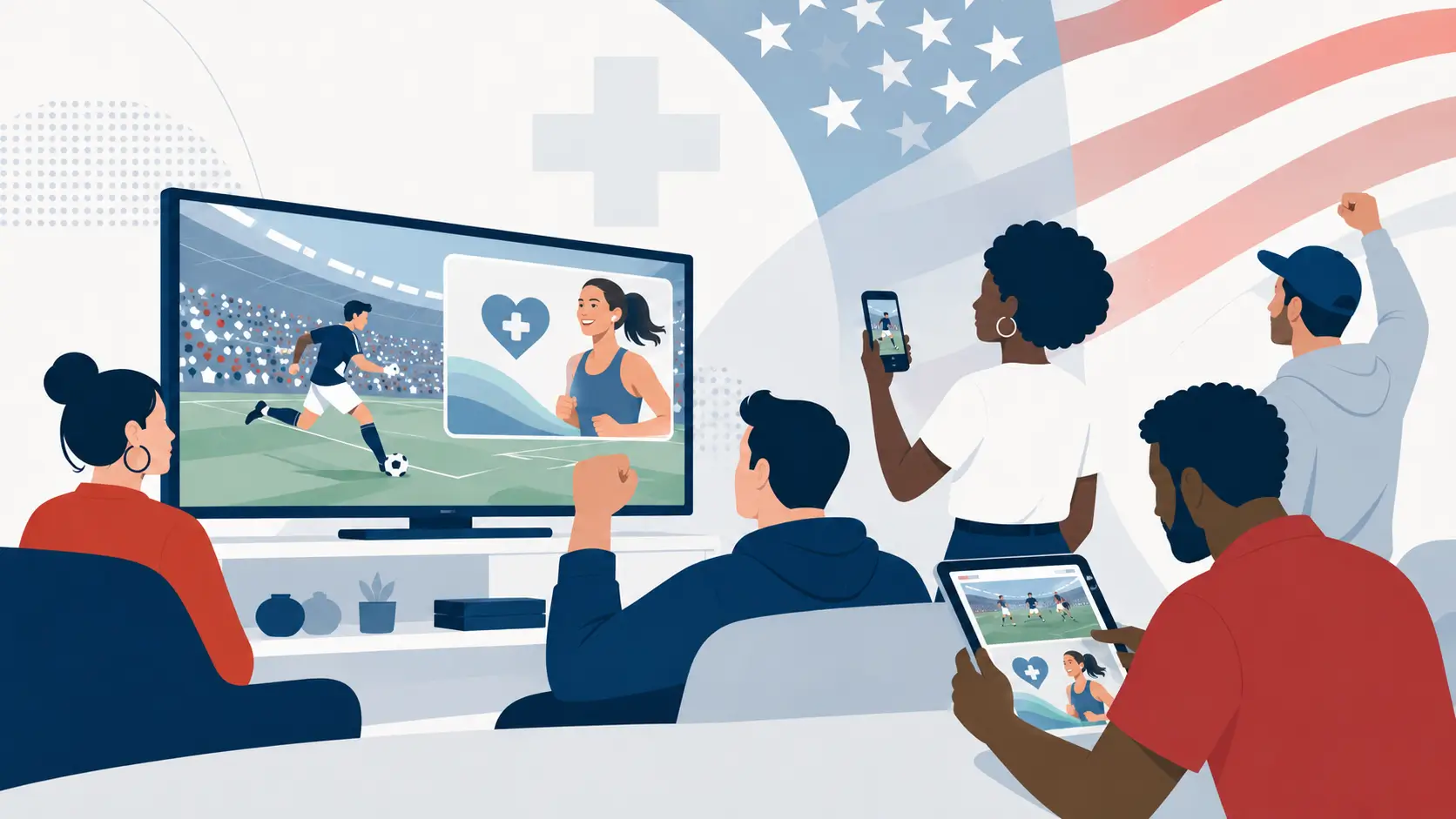
Since kicking off in mid-June, the 2026 FIFA World Cup has continued to reach new heights in terms of viewership and digital engagement—presenting a powerful opportunity for health and pharma companies to get their brands in front of captive and highly engaged audiences.
According to FIFA’s data, the group stage of the North America-hosted tournament, which concluded June 28, was marked by new records not only in the number of participating teams, but also in terms of audience attendance in stadiums and at fan festivals, broadcast viewership and online engagement.
In the U.S., lead broadcasters Fox and Telemundo have charted record-high audience counts for individual matches, with Telemundo reporting last week that its average audience counts have so far more than doubled those of the last World Cup, held in Qatar in 2022.
The Spanish-language broadcaster also estimated that ad campaigns appearing during its coverage are experiencing lifts of 20% in brand recall and 40% in message memorability, with consumers searching for advertisers at rates 20% higher and demonstrating a 25% increase in purchase intent compared to the last tournament.
Pharma Ads Make a Splash
Several health and pharma brands have thrown their hats in the ring. In addition to the many brands that have purchased ad slots during match broadcasts, organizations like Sanofi, Genentech and the University of Kansas Health System have signed on as sponsors to support hometown host cities, while Bristol Myers Squibb, Haleon and Kaiser Permanente have built on their own tournament-related partnerships by launching soccer-themed campaigns, too.
As of June 28, according to data shared with solli by iSpot, pharma brand ads have aired more than 500 times across English- and Spanish-language World Cup broadcasts in the U.S., making up around 4.5% of ad airings across all industries. Bayer’s MiraLAX brand takes the crown for most appearances during English broadcasts, with 96 ad airings, while ads for Kenvue’s Tylenol lead the Spanish broadcasts with 59 airings.
The most-seen single pharma spot on English-language broadcasts is Haleon’s “For the Assist,” which ranks sixth across all industries, while a spot for Tylenol’s rapid release gels leads the way on Spanish broadcasts to place 19th overall.
Karina Ong, VP of marketing at Haleon U.S., told solli via email that the consumer health company “saw a major cultural moment with soccer’s rapid U.S. growth to become involved in this summer’s biggest event.”
Haleon’s campaign and partnership with U.S. soccer represent an opportunity to reach “a highly engaged, expanding fanbase” with messaging about how the company’s products “support real-world moments and routines, while expanding Haleon’s presence beyond the medicine cabinet into culture and lifestyle,” Ong said.
The “For the Assist” campaign spans a broad range of channels, including broadcast, social, digital, earned media, influencers and e-commerce.
BMS, too, seems to view its work around the World Cup as a vehicle for fostering greater connection between its health-focused mission and the communities it serves. As a spokesperson told solli, the investment is meant to “strengthen relationships with our patients, help us engage with our communities and demonstrate our commitment to pursuing bold science to the world.”
BMS’s “Won’t Lose” corporate campaign launched in May across connected TV, programmatic display, streaming and digital audio, video and social media. Beyond boosting brand awareness, per the spokesperson, specific goals include leveraging cultural relevance to strengthen its corporate reputation among patients, policymakers and other key opinion leaders; shining a light on BMS’s work to support local growth; and highlighting “our bold science, innovation and commitment to transforming patients’ lives through on and offline activations.”
Making Connections
Kelly Morrison, group SVP of engagement strategy and Sports Marketing Center of Excellence lead at CMI Media Group suggested that major sporting events like the World Cup present a strong opportunity for health and pharma marketers for several reasons.
For one, as she told solli via email, this year’s tournament being the biggest World Cup in history “creates an unparalleled reach for advertisers.” For another, she added, “there is also a sense of unification in these large global sporting events.”
On a deeper, more conceptual level, though, health and pharma companies can forge strong connections between their own offerings and the awe-inspiring performances capturing the world’s attention.
“The players in these matches are at the peak of their health and fitness journeys, which gives pharma and health brands relevant context especially as a shift has occurred focusing on preventative health in this space,” Morrison said.
With that in mind, she continued, the most “forward-thinking” brands will center their messaging around concepts that can apply to both athletes and patients: the overlap between science and sports, the idea of operating at peak performance and the importance of recovery and resilience. Brands may also choose to team up with any of the many athletes who have begun speaking up about their own physical and mental health challenges.
Indeed, as Haleon’s Ong put it, “Sports moments combine reach with deep engagement, and they naturally connect to themes like performance, recovery and readiness.” She added that health and wellness brands like Haleon’s “create an authentic way to demonstrate relevance while building trust through real, everyday use cases.”
That authenticity is key as brands continue to seek out ways to reach audiences where they are.
“These cultural sports moments, whether with the World Cup 2026, the Olympics or any other global sporting event, also present a unique opportunity for healthcare brands to partner with these events and leagues when patients, caregivers and healthcare professionals are actively engaged in content, during their ‘blue jean moments,’” CMI’s Morrison said. “Fans are actively engaged with sports content and have a high likelihood of brand recognition for brands aligning themselves with sporting events and sport teams.”
Beyond TV Broadcasts
Along with the hundreds of millions of viewers around the world who have tuned into matches in stadiums and on TV, FIFA noted in its statistics that visitors and impressions on the organization’s website, app and social media channels are skyrocketing, as are searches for and views of other World Cup-related digital content on TikTok and beyond.
Across what Ong described as Haleon’s “360° campaign,” the exec noted that influencers—including athletes and creators—have been “especially impactful in driving engagement and bringing the campaign to life in culturally relevant ways.”
That echoed another observation from Morrison, who suggested that leveraging content creators “gives pharma and health brands an authenticity when done right,” especially as audiences are consuming World Cup content across multiple screens.
Elsewhere, she nodded to linear and streaming TV and programmatic buys across audio, video and banner ads as important to World Cup campaigns, while also singling out the major opportunity in experiential marketing as matches in this year’s tournament are spread across 16 cities in three countries.
“Brands can own the fan experience around the game,” Morrison said. “This can be done hyper-targeted with watch parties, with out-of-home in these cities and leveraging corporate responsibility and goodwill like partnering with local youth sports organizations in these cities.”