
























Beyond Awareness: Why Point of Care is Emerging as Healthcare Marketing’s Most Contextually Relevant Channel
Discover why point-of-care marketing is becoming essential for pharma brands, helping marketers engage clinicians with relevant information at moments of clinical intent.


Every pharma brand spends millions of dollars each year building awareness, and with good reason. Building familiarity among clinicians and patients is an important first step in establishing a brand in the market. But prescribing decisions don’t happen during TV commercials, at medical conferences, or during campaign activations. They happen in the context of patient care, when patient needs are front of mind.
The opportunity for marketers lies in engaging clinicians at the point of care, when they are actively seeking information to support patient care. That means recognizing moments of clinical intent and creating ways to deliver relevant, useful information within them.
Here, we break down what makes point of care an increasingly important lever in a pharma brand’s marketing strategy today, and how brand teams can seize the opportunity to engage more meaningfully with clinicians.
Reintroducing point-of-care marketing
Point of care isn’t a new channel in healthcare marketing. It has existed for years as a place-based strategy, with marketers placing materials in locations where care happened, including doctors’ offices, clinics, and electronic health records.
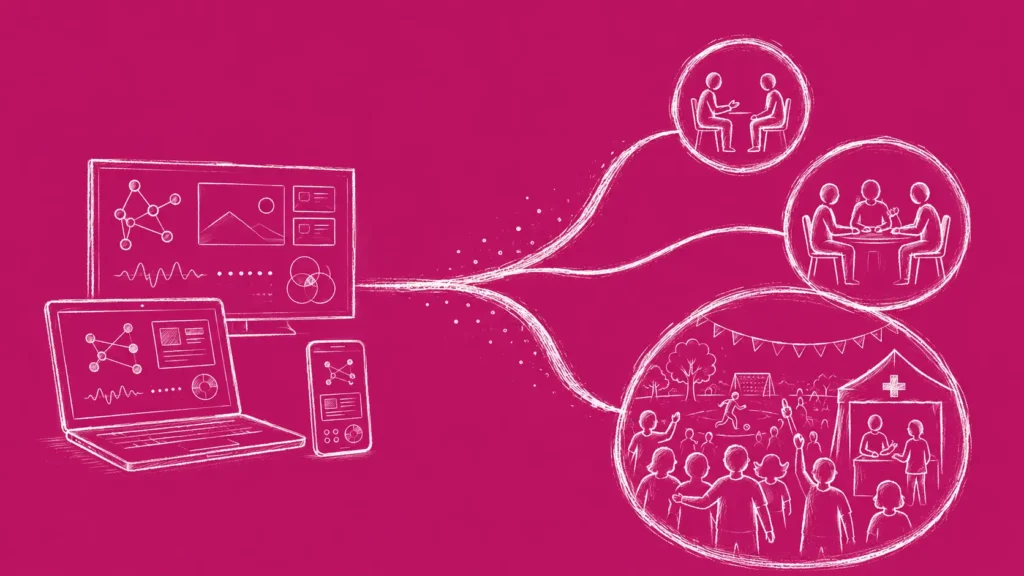
But that was the old-school approach. Today’s point of care extends beyond a physical location to the clinical decision environment: the trusted workflows and tools clinicians turn to as they evaluate therapies, check safety considerations, confirm dosing, and seek information to support patient care.
Awareness versus intent: Why point of care is different
What makes point of care fundamentally different from other marketing tactics? Intent.
A clinician actively seeking information about dosing, contraindications, safety considerations, or treatment options is demonstrating fundamentally different intent than one encountering a message while consuming general professional content. The difference isn’t simply attention — it’s purpose. In these moments, clinicians have an immediate information need, making relevance and utility especially important.
That’s what makes point of care different. Rather than competing for attention outside the clinical workflow, it creates an opportunity to provide relevant information within the trusted resources clinicians already use when actively seeking answers.
Why AI makes point of care even more important
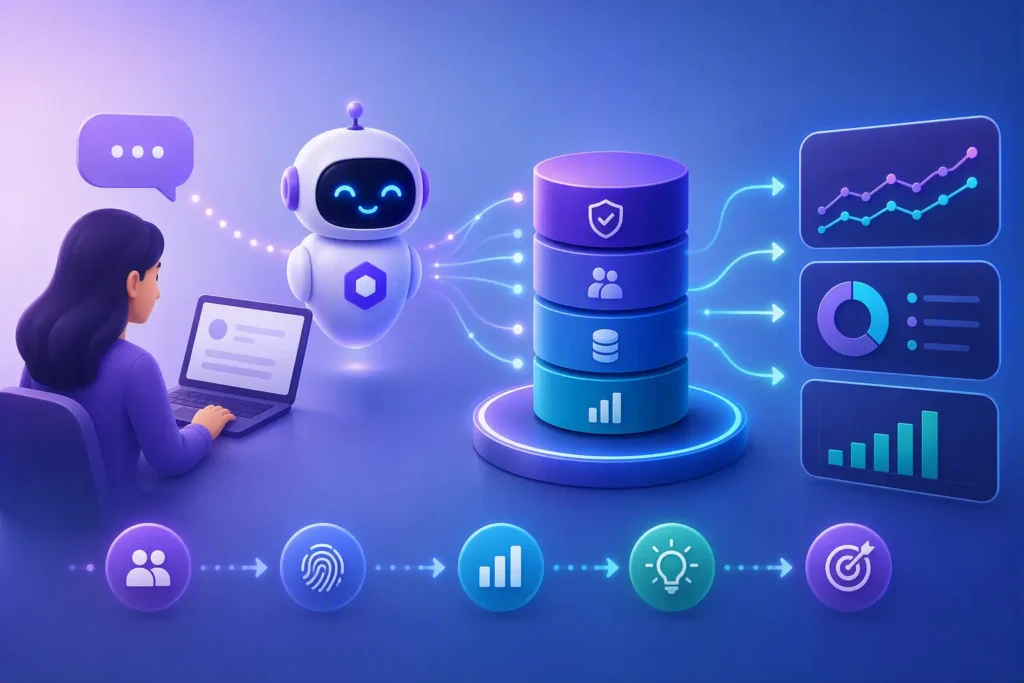
As AI dramatically expands clinicians’ access to information, trust and workflow integration become even more important. Clinicians already navigate a constant flow of new studies, evolving guidelines, treatment information, and other clinical data. AI is making that information easier to find, synthesize, and navigate, but greater access does not necessarily make it easier to know what information is most relevant or reliable.
In the AI era, access to information is no longer the constraint. Confidence in the information is.
That makes trusted point– of– care environments more valuable, not less. For point– of– care platforms, AI creates new opportunities to better understand context, improve relevance, and make useful information easier to navigate within the workflows clinicians already rely on.
The goal should not be more content for its own sake. It should be reliable, accurate, and relevant information delivered in a way that fits naturally within the clinical workflow and supports clinicians as they evaluate treatment options and make decisions about patient care.
Put simply: AI makes information abundant. Point of care makes information relevant. Trust makes it useful.
For marketers, the opportunity isn’t to add to the volume of information clinicians encounter, but to earn relevance by delivering useful information within the trusted workflows where clinicians are already seeking answers.
How point of care complements an omnichannel strategy
Omnichannel strategies work best when different channels play distinct but complementary roles. Awareness channels build familiarity, helping clinicians understand which brands and treatment options they should know about. Consideration channels can then help clinicians deepen their understanding of a treatment option.
Point of care plays a different role. It brings relevance closer to the clinical workflow, when a clinician is actively seeking information to evaluate options for a specific patient. The questions evolve across that continuum:
- Awareness: What brands and treatment options should I know about?
- Consideration: What should I understand about this treatment option?
- Point of Care: What information is relevant as I evaluate options for this patient?
Seen this way, point of care isn’t a replacement for awareness and consideration tactics. It complements them by creating an opportunity for relevant engagement when an information need becomes immediate and patient specific.
Five characteristics of high-value point of care
Not every placement that occurs near patient care delivers the same value. High-value point– of– care environments are distinguished by their ability to align engagement with an active clinical information need.
When evaluating a point-of-care opportunity, marketers should look for five characteristics:
- Clinical intent: Clinicians are actively seeking answers, whether evaluating treatment options, checking dosing or safety information, or researching a clinical question. That intent creates an opportunity for engagement aligned to an immediate information need.
- Decision proximity: Engagement occurs close to active treatment evaluation, when the information need is immediate and contextual relevance is especially important.
- Trusted context: Clinicians rely on the environment for accurate, evidence-based clinical information. Point-of-care engagement benefits from being delivered within workflows and resources clinicians already choose to use as part of patient care.
- Cognitive relevance: Information aligns with what the clinician is trying to accomplish in that moment. Rather than competing for attention, relevant point-of-care engagement can complement the task already underway.
- Behavioral signals: The environment generates signals based on what clinicians are actively doing, such as researching drug dosing or evaluating potential interactions, rather than relying solely on who they are. These signals can help marketers better understand context and deliver more relevant engagement.
Together, these characteristics distinguish high-value point of care from simply placing a message near a clinician. The opportunity isn’t just proximity. It is greater relevance to a clinician’s immediate information need.
How to evaluate point-of-care partners
Understanding what makes point of care valuable is only the first step. Marketers also need to determine whether prospective partners can actually deliver against those characteristics.
Reach matters, but it shouldn’t be the only consideration. Look for evidence that clinicians actively use the platform when seeking clinical information. Understand what behavioral signals the partner can observe, how those signals inform engagement, and how closely engagement can align with moments of clinical intent. Just as importantly, evaluate the trust clinicians place in the environment and the governance practices designed to protect it.
Ultimately, the question isn’t simply, “How many clinicians can I reach?” It’s “How relevant can I be when those clinicians are actively seeking information?”
Looking ahead: The next phase of healthcare marketing
The next era of healthcare marketing won’t be defined by who reaches the most clinicians, but by who can be most useful when clinicians are actively seeking information.
As AI accelerates access to information and clinicians face growing complexity, trust, workflow integration, and contextual relevance become increasingly valuable. Point of care is where those forces converge, which is why it deserves a central role in the modern omnichannel strategy.
At epocrates, we see the importance of point of care every day. Clinicians perform more than 426,000 drug lookups on our platform daily, a powerful signal of the clinical information needs that arise within everyday workflows. It’s why we believe point of care has an increasingly important role to play in helping marketers deliver useful, relevant information within the environments clinicians already rely on.
To learn more about how epocrates helps life sciences marketers engage clinicians within trusted clinical workflows, visit www.epocrates.com/advertise.