






















WEBINAR: The Crucial Role of Caregivers: Navigating the Rare Disease Journey
A solli x CMI Media Group webinar

Caregivers can be advocates, researchers, care coordinators and an essential link between patients and healthcare professionals. In rare disease, how can pharma and healthcare organisations better recognise and support their role?
Watch the full webinar to hear the panel discuss how pharma and healthcare organisations can build more informed, inclusive and supportive approaches to engaging caregivers in rare disease.
A rare disease diagnosis rarely affects the patient alone. Behind many patients is a caregiver helping to navigate a complex journey, from searching for answers and accessing specialist care to understanding treatment options and advocating for their loved one.
Yet much of that work can remain unseen.
In a new webinar from solli and CMI Media Group, The Crucial Role of Caregivers: Navigating the Rare Disease Journey, experts from across caregiving, healthcare and rare disease marketing explore the role caregivers play throughout the patient journey, and what healthcare organisations and pharma brands can do to better recognise, engage and support them.
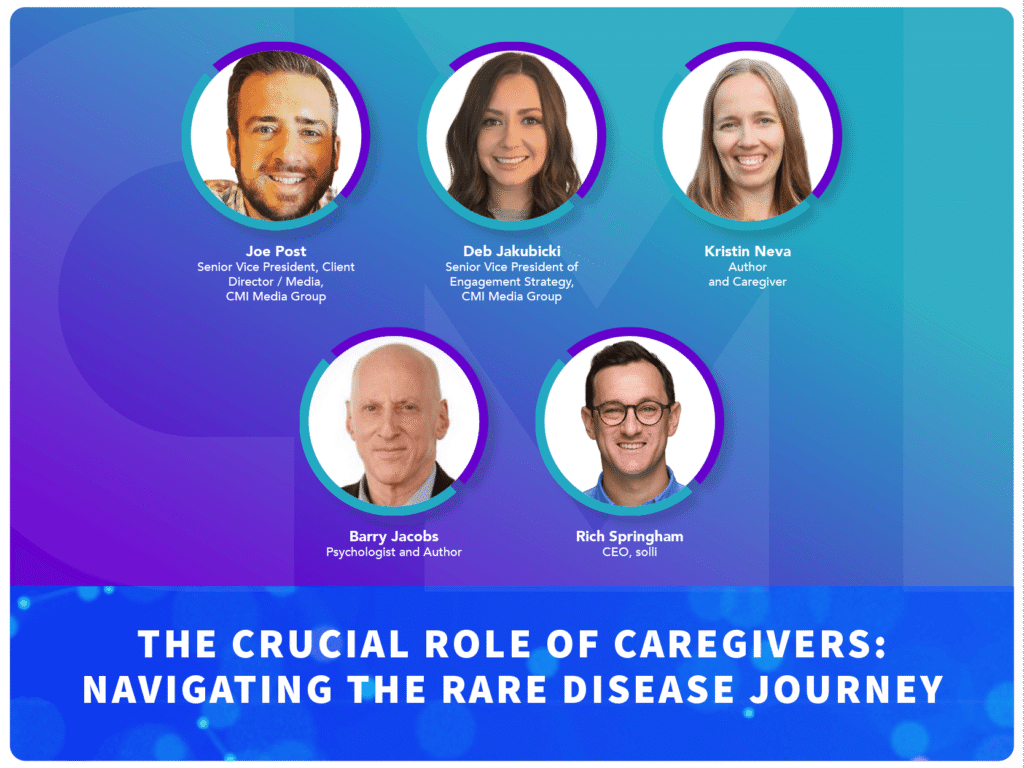
The discussion brings together Kristin Neva, columnist for ALS News Today and long-term caregiver to her husband Todd; Barry J. Jacobs, clinical psychologist and family caregiving expert; Deb Jakubicki, Senior Vice President at CMI Media Group and member of its Rare Disease Center of Excellence; and Joe Post, Client Director at CMI Media Group and leader of its Rare Disease Center of Excellence.
Throughout the conversation, the panel explores the often unseen work caregivers take on, from researching conditions and coordinating care to navigating access and advocating for patients. They also consider the importance of recognising caregivers early in the rare disease journey, when patients and families may be searching for information while facing significant uncertainty about what comes next.
The discussion looks at what this means for pharma and healthcare organisations: how they can provide clear and practical information, recognise the expertise caregivers develop through lived experience, and build trust by listening to and supporting caregivers while keeping the patient’s own voice and preferences central.
Ultimately, the conversation asks organisations to think beyond simply reaching caregivers as an audience and consider how communications can better support the role they are already playing throughout the rare disease journey.
More from CMI Media Group on rare disease
For more from CMI Media Group on navigating the complexities of rare disease communications, read Rare Disease and the Question After the Click, exploring how pharma marketers can better connect patient and HCP strategies and prepare for the conversations patient-facing communications can create.