


















HealthNext 2026: PulsePoint Debuts Agentic AI Platform
The launch capped off a day filled with discussions about AI in health and pharma media.


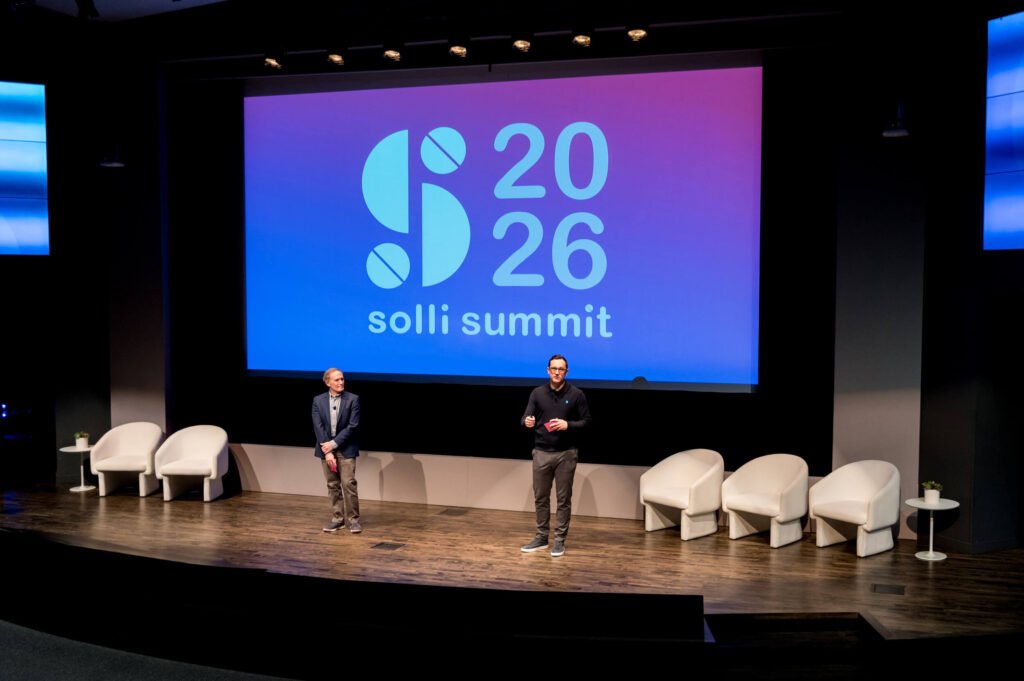
PulsePoint’s annual HealthNext summit took place in New York City on Tuesday and comprised a full day’s worth of conversations about the hottest topic in pharma media: artificial intelligence.
As the day went on, one speaker joked that panels seemingly weren’t allowed to proceed without at least some mention of AI, while several others noted that the topic was simply unavoidable in the current landscape.
Fittingly, the conference culminated with PulsePoint’s live debut of Hatch, a platform meant to enhance healthcare marketing workflows with the addition of conversational AI.
As Ezra Suveyke, PulsePoint’s chief product officer, said during the presentation, in contrast to other solutions that merely add AI to existing processes—and that ultimately “fall completely flat,” as he put it—Hatch was built with agentic AI embedded from the ground up.
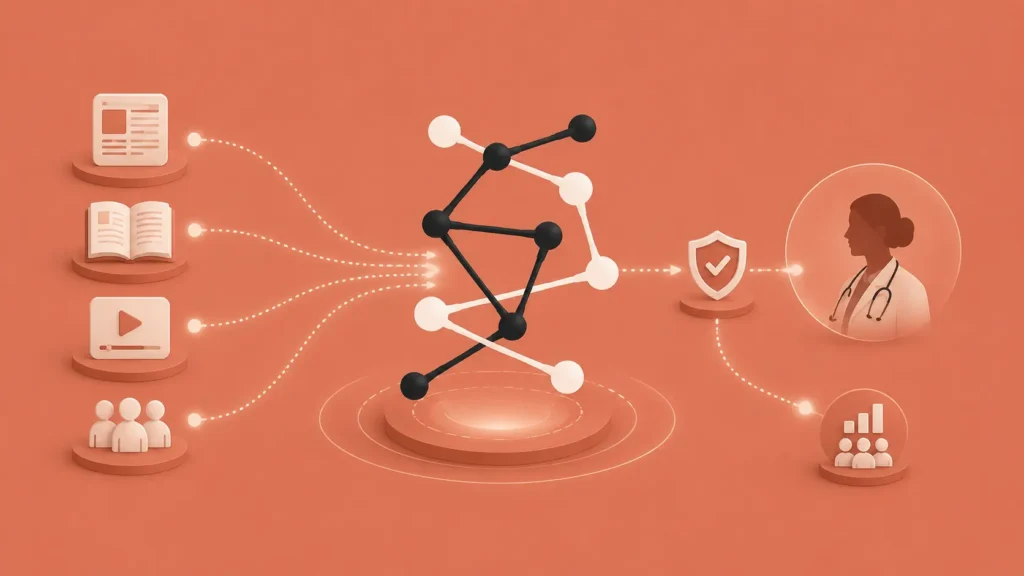
The platform draws not only on a client’s historical and live campaign data, but also from the open web and PulsePoint’s own compendiums of clinical and claims information.
With that, users can ask Hatch to answer questions about campaign planning and performance, construct custom dashboards and generate a wide range of reports, all via plain language conversations and with the ability to save specific queries for repeated use. The technology can also analyze past and current campaigns to offer advice for future media plans; in one sample query shown in Tuesday’s demo, Hatch suggested that future iterations of a certain campaign could be just as effective with only seven tactics, compared to the 84 tactics currently in play.
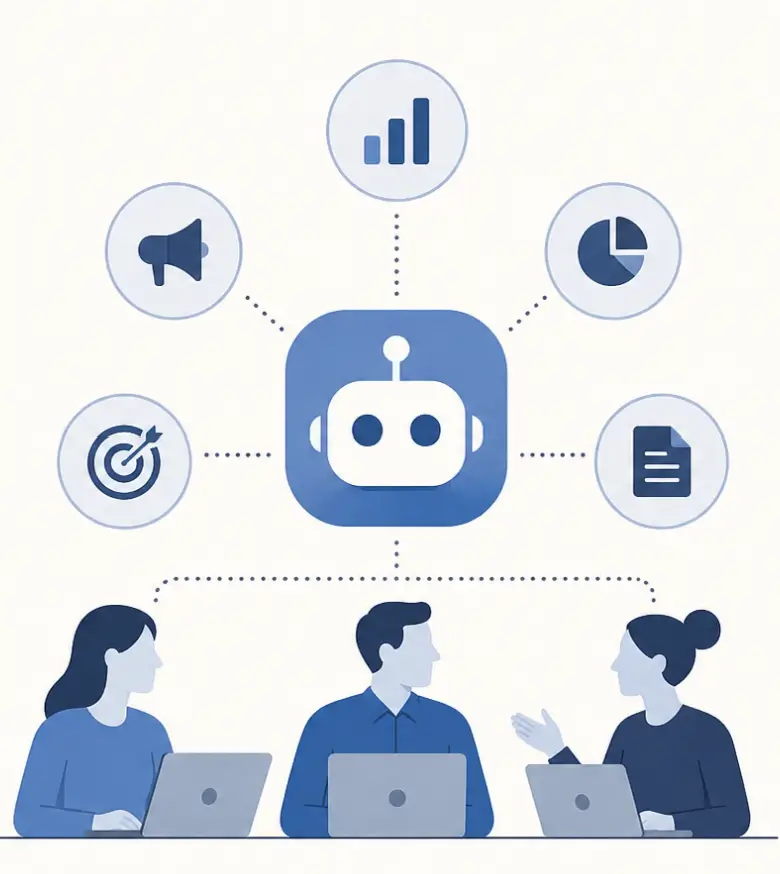
According to PulsePoint’s announcement, the platform is designed to combine research and planning, audience intelligence, measurement and programmatic activation into a single workspace, all managed by an AI engine that clearly cites its verified sources.
“We dove in headfirst into the empty AI swimming pool, and it’s really awesome what is capable these days. No longer is time in our way,” Suveyke concluded in Tuesday’s presentation. “That’s the case for engineers, that’s the case for traders, researchers, media planners. The idea board should be open to everybody.”
The platform will soon roll out to “a select group of alpha users,” per the announcement.
Filling in the gaps
Leading up to Hatch’s debut, discussions throughout the HealthNext agenda inevitably circled back to AI at some point or another.
One common thread revolved around the use of AI tools to close knowledge gaps for HCPs and patients alike—representing an opportunity for marketers to step up their awareness and education efforts.
Toral Vaidya, M.D., a New York City-based dermatologist, suggested during the day’s first panel that individuals are increasingly seeking out information well before setting foot in a doctor’s office and thus need access to better, evidence-based health resources beyond broad LLMs like ChatGPT. Hematologist/oncologist Alexandra Gomez-Arteaga, M.D., agreed, adding that, as a physician, it would be helpful to have access to a platform combining disparate sources of information about pharma companies’ products, trials, regulatory progress, market access and more.
Similarly, during another discussion later in the afternoon, Lindsey Gidjunis, SVP of innovation at CMI Media Group, described how HCPs’ having access to AI tools and their massive amounts of rapidly surfaceable information can improve interactions with brands.
“We often see that most of the issues brands run into isn’t product reference, but the knowledge gaps and speed to diagnose,” Gidjunis said. “So, if we’re thinking about how these clinical AI engines can really work seamlessly into the existing workflow, it could be that resource for the doctor in that clinical setting.”
Ana Wilkinson, HCP orchestration lead for Repatha at Amgen, agreed and noted, “Anyone that says [AI] is not amazing—to us as marketers, I think it’s incredible.”
She lauded not only how AI tools can help HCPs wade through the mountains of clinical data that continue piling up, but also how they offer marketers the “gift” of being able to better understand the questions clinicians are asking and what they’re interested in, allowing for better profiling.
“As a marketer, sometimes I feel like I’m just throwing darts at a dartboard and I just pray to God something’s gonna stick,” Wilkinson said. “Now we have an opportunity, if we’re willing to really listen to what [an HCP] needs and be there when they need it.”
AI meets agency life
In addition to their effects on patients and clinicians, new technologies are rapidly changing marketers’ internal workflows, too.
At HealthNext, a panel of agency leaders were asked about the most effective uses for AI in their offices. Elizabeth Beringer, president of Real Chemistry Media, gave a shoutout to the agency’s recently launched Anatomi suite of AI marketing tools, but said her favorite internal use case is to have AI take a critical external lens to Real Chemistry’s client materials—“using AI to kind of just hand us our own asses, basically.”
Ray Rosti, president of Klick Media, described the particularly exciting potential of AI to connect quantitative and qualitative data, especially in planning, while Lauren Boyer, CEO of Underscore Marketing, said using AI has enabled her agency to “elevate our thinking to a much more strategic level.”
Meanwhile, Brad Liebow, chief investment officer at Publicis Health Media, noted how his team has “really focused on the democratization of the access to the tools” and encourages staffers to apply AI in whatever ways can make their work better and more efficient.
But it’s not all full steam ahead. The panelists all expressed caution around simply “chasing shiny objects” or implementing AI just for the sake of it.
When asked where they’re directing their teams to slow down, the leaders cited exorbitantly priced enterprise tools and the need for transparency around AI use, as well as the risks of brand homogenization and client-facing errors that can occur if there’s blind reliance on the technology.
“So, really just taking the time to train people: You have these amazing tools at your disposal now; you’ve gotta trust but verify,” Beringer said.