
























The Push for ‘True Partnership’ Between Media Agencies and Pharma Clients
The agency-pharma relationship is a two-way street.


This article is part of solli’s July series exploring The State of the Agency.
Advancements in technology are driving major shifts in the standard media and marketing agency structure, which in turn are reshaping and redefining the relationship between agencies and their clients.
Much has been written and said about what health and pharma clients are looking for from their agency partners in 2026. In a nutshell: full-service offerings powered by artificial intelligence and other data-driven technologies, resulting in that elusive combination of lower costs, greater efficiencies and improved outcomes.
Less talked about, however, is what agencies need from their clients to fuel a maximally fruitful relationship on both sides.
Agencies are increasingly looking for clients that are more collaborator than customer, who are willing to invest their own time, talent and technology into the team-up in pursuit of the best possible results, rather than relying on an agency to supply it all—and to do “more with less” in the process.
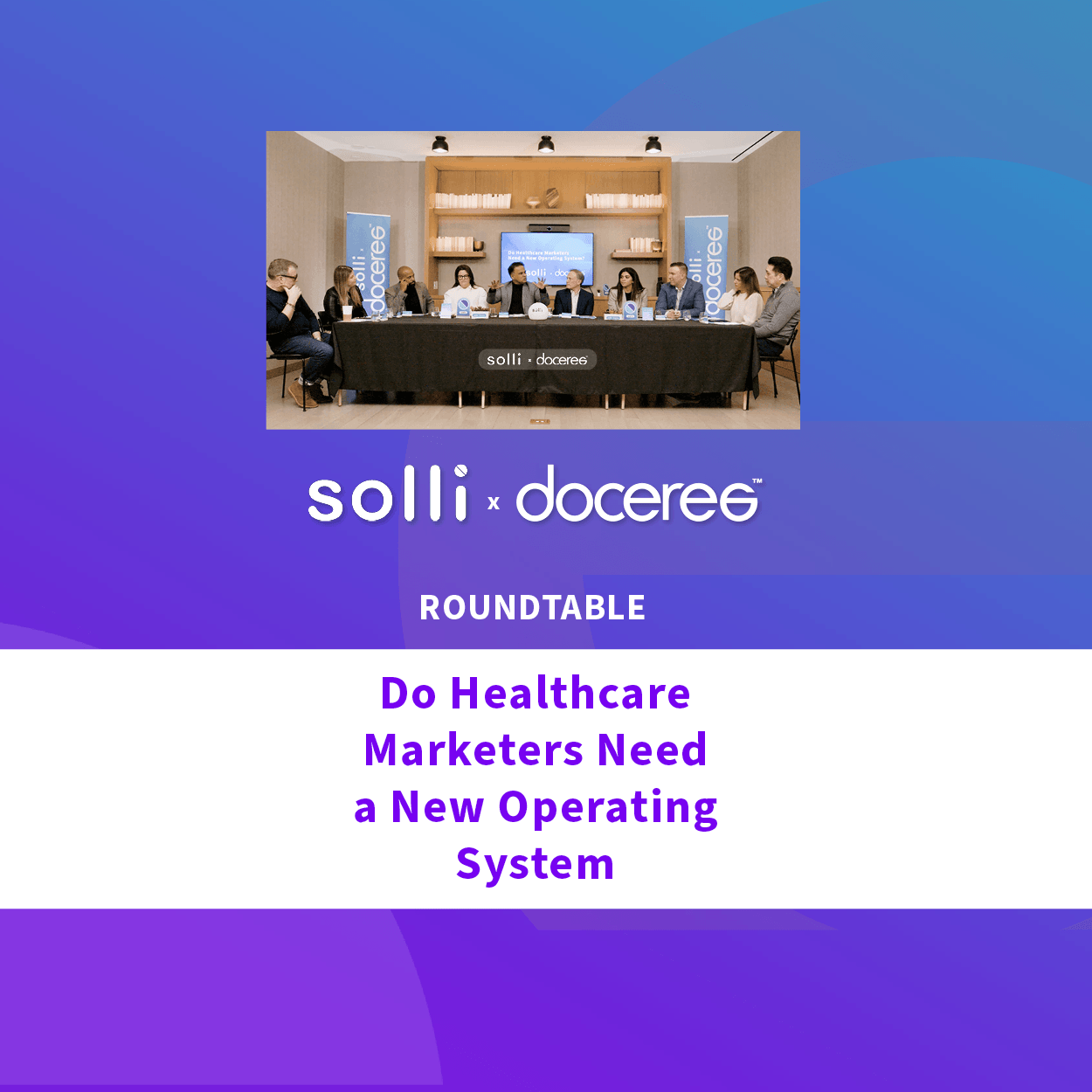
During a roundtable discussion convened by solli earlier this year, participants from across the pharma media landscape suggested that clients’ being more involved in the current agency operating system could help them better understand where cuts can and can’t actually be made, giving them greater insight into the delicate balance between savings and results.
Stronger collaboration in the agency-pharma relationship can also boost knowledge-sharing in both directions, allowing marketers to draw on pharmas’ clinical expertise and vice versa. And client input and investment will be crucial especially as the industry is redrawn by AI-powered workflows, “because ultimately, what we build will push you forward,” as one roundtable participant noted.
Defining a ‘true partnership’
“At the end of the day, agencies are looking for a true partnership, moving away from feeling like a vendor relationship and more like an integrated business partnership,” Holly Dunn, managing partner and head of investment and activation at Havas Media Network North America, told solli in a recent interview.
Dunn laid out several components of what such a partnership might look like. To start, she called for earlier involvement and more transparency in clients’ business planning. That would see companies bringing agencies into the process well before marketing strategy has been officially decided and also giving them a clearer view of pharmas’ “overall business objectives, things that they’re facing in the market, their commercial priorities.”
At the other end of the timeline, she suggested that partners should have “shared accountability around outcomes, instead of just business-specific or historical advertising KPIs.”
Finally, looking beyond tangible strategy requirements, among the most important ingredients in a successful agency-pharma partnership is a shared growth mindset: “willingness to test new technologies, to innovate together, to really push the boundaries of historical performance,” as Dunn described.
Shattering silos and picking up the pace
As great as that level of mutually beneficial collaboration sounds, it may be much more easily said than done.
Roadblocks abound on the way to achieving the aforementioned “true partnership” between agencies and clients. One of the biggest, per Dunn, stems from pharma companies’ complex internal structures.
Pharmas typically have a broad range of teams—commercial, marketing, sales—that all work separately but each own a different piece of the media and marketing puzzle.
“Gaining consensus across those stakeholders within an organization is always very challenging because of who owns the agency relationship,” Dunn said. “Typically, it’s owned by marketing, and then something like commercialization, access, all the things that are involved in the marketing ecosystem are owned by other stakeholders.”
It’s therefore “very difficult,” she continued, “to break down those silos and really be able to affect the entire customer experience journey.”
For another, there’s the fact of the healthcare and pharma industries’ historically slower pace in adopting new technologies and adapting to broader business trends and changes, as they walk a tightrope of strict regulatory requirements, safety concerns, high operating costs and more.
Participants in the solli roundtable suggested that pharmas need to start speeding things up to keep pace with their agency partners. A mismatch in agility could lead to faster-moving agencies, for example, rapidly outstripping their clients in terms of AI adoption and other new innovations, and thus creating an imbalance in what should otherwise be an evenly weighted partnership.
While Dunn acknowledged that pharmas have traditionally been “a little bit more reactive than proactive in the marketplace,” she noted that there has been an acceleration in the last 18 months—still a few years behind other industries—in how they’re adjusting to media- and marketing-related shifts, spanning areas like in-housing, technology and ownership.
“So I think it’s going to be interesting, given everything else that’s happening in the pharmaceutical landscape, to see how quickly they can adapt, because there’s a lot of pressure on their businesses right now,” she said.
The new value proposition for agencies
Pharmas aren’t the only ones tasked with evolving in a rapidly changing environment. Agencies, too, are actively working to adapt to disruptive forces, as a flood of AI and other tech tools not only overhaul workflows, but also enable clients to bring more marketing work in house.
With AI leveling the playing field and so boosting competition—both among agencies and in their client relationships—the onus is on marketers to continue proving their indispensable value by emphasizing their specialized expertise and far-reaching experience.
That may require agencies to step into new roles or expand their offerings. As a pair of Eversana InTouch leaders recently told solli, agencies may choose to play up their expertise as consultants or even license out their own technologies to health and pharma companies interested in in-housing certain tasks.
Dunn echoed that sentiment, highlighting the particular edge agencies have over their clients in developing tech tools, thanks to their usually broad collections of intellectual property, proprietary platforms and client insights.
“Even as clients start to advance their in-house data and technology tools, one of the challenges that they have is that typically, from a procurement standpoint, they’re going to pick one technology,” she explained. “From an agency perspective, we have the ability to look across a variety of clients, a variety of technology and offer different tools, testing capabilities, insights and best practices that a client that’s focused on one set of tools or one technology platform isn’t going to have the experience in.”
Ultimately, as the agency-pharma relationship continues to morph and expand, diversification will certainly be one key to success.
Another, according to Dunn—and going hand-in-hand with that role expansion—is flexibility, both internally at agencies and in terms of the array of options they can offer clients.
“The pharma and healthcare world is very complex, and there’s a lot of change happening. It’s a really exciting time, and I think that the biggest piece of guidance that we would give is just to maintain flexibility, because there’s not going to be a one-size-fits-all answer for everything,” she said.
For more on The State of the Agency, click here.
Related solli Training Course:
Interested in learning more about the roles of agencies and brands in pharma media? Dive even deeper with this training course on the industry’s key stakeholders.