





















Doceree Unveils Daily Command AI Platform For Pharma Media
At Doceree Health Decode: The Makers Summit 2026, the company both debuted the platform and invited 75 pharma A-listers to refine it on the spot.

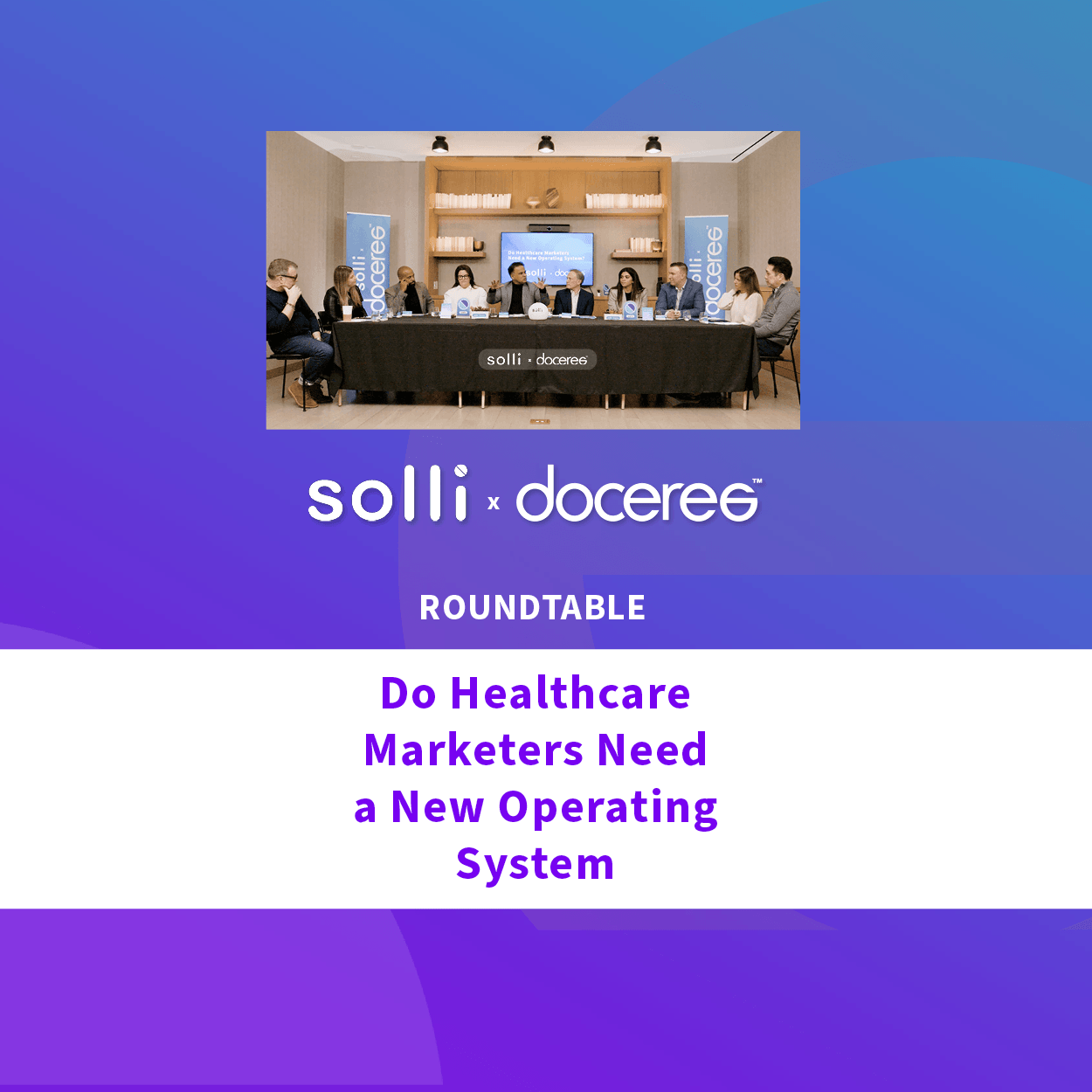
Doceree didn’t just debut its AI-powered pharma commercialization platform Daily Command on Thursday. It challenged the 75 pharma and agency leaders who attended Health Decode: The Makers Summit 2026 to refine it on the spot, transforming what might otherwise have been a typical product launch into a genuinely exhilarating exercise in co-creation.
The company expects the bespoke platform – think ChatGPT for pharma commercialization – to revolutionize campaign deployment and refinement for pharma brands.
The launch and high-profile rollout of the platform underline Doceree’s belief that the future of pharma marketing hinges on grounding commercial decision-making in clinical-intent data. To that point, Daily Command represents an ambitious attempt to answer a tantalizing question: What might it look like, in a brand director’s hands, when better data meets an AI platform built specifically to act on it?
During his morning keynote presentation, Doceree founder and global CEO Harshit Jain outlined the need for a pharma commercialization platform comparable to what Workday is for HR execs and Salesforce is for sales reps.
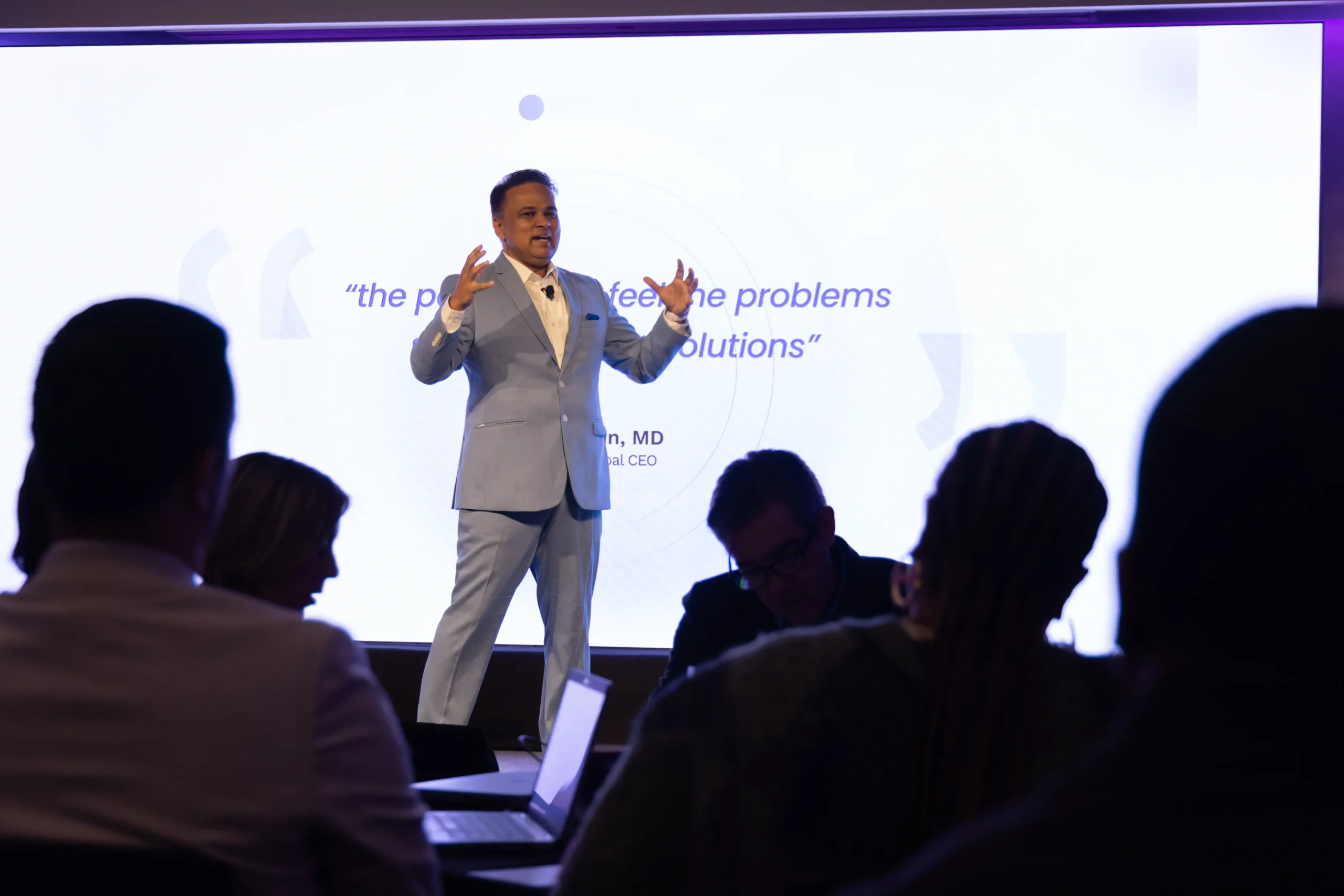
“The industry is not creating the products users need,” he said. “Look at the last decade: What kind of evolution have you seen? We’re buying the same media from the same DSP… Largely things have not changed.”
Daily Command is a big swing. During the morning reveal of the platform, Doceree VP, product development, AI and innovation Varun Hasija plugged the same query (“Why did Primera’s shares decline in the southeast region?”) into Claude, ChatGPT and Daily Command. The Claude and ChatGPT responses were, predictably, somewhat generic. The Daily Command response was meticulously detailed, highlighting specific shortfalls and suggesting corrective action.
“It wakes up before you do. It probably never sleeps. It connects everything together and becomes smarter as you begin using it,” Hasija noted.
Daily Command was built over the last three months with input from numerous potential users, including pharma leaders (from Bristol Myers Squibb, Eli Lilly, Merck and Sanofi) and agency execs (from Avalere Health, Deerfield, Eversana, Havas Media, Ogilvy Health and Omnicom Health Group). The platform was further stress-tested during Health Decode’s co-creation sprint, which divided attendees into three groups (brand health and competitive intelligence, campaign planning and activation, and measurement and performance analytics) and tasked them with giving Daily Command a thorough once-over. The single instruction given by Jain: “Tell us what is not working.”
They took this task seriously. During the live-build update that followed the group sessions, representatives from each group aired their likes and dislikes, which included questions around cost, visibility (“I want to know what my boss is asking”) and usability (“I don’t know if I would open this every day”). Hasija joked that the session was in danger of becoming a “product roast.”
All feedback was shared with Doceree’s engineering team in India – more than 100 members of which were on call, according to Doceree co-founder and president Kamya Elawadhi. By the end of the day, they had completed several substantial changes to Daily Command, making it downloadable in editable formats, more mobile-friendly and “more polite.” It also now offers users the ability to receive a morning briefing via email and to set alerts using chat. Hasija acknowledged with a laugh that the request for a Daily Command app “would probably take more than three hours” to accommodate.
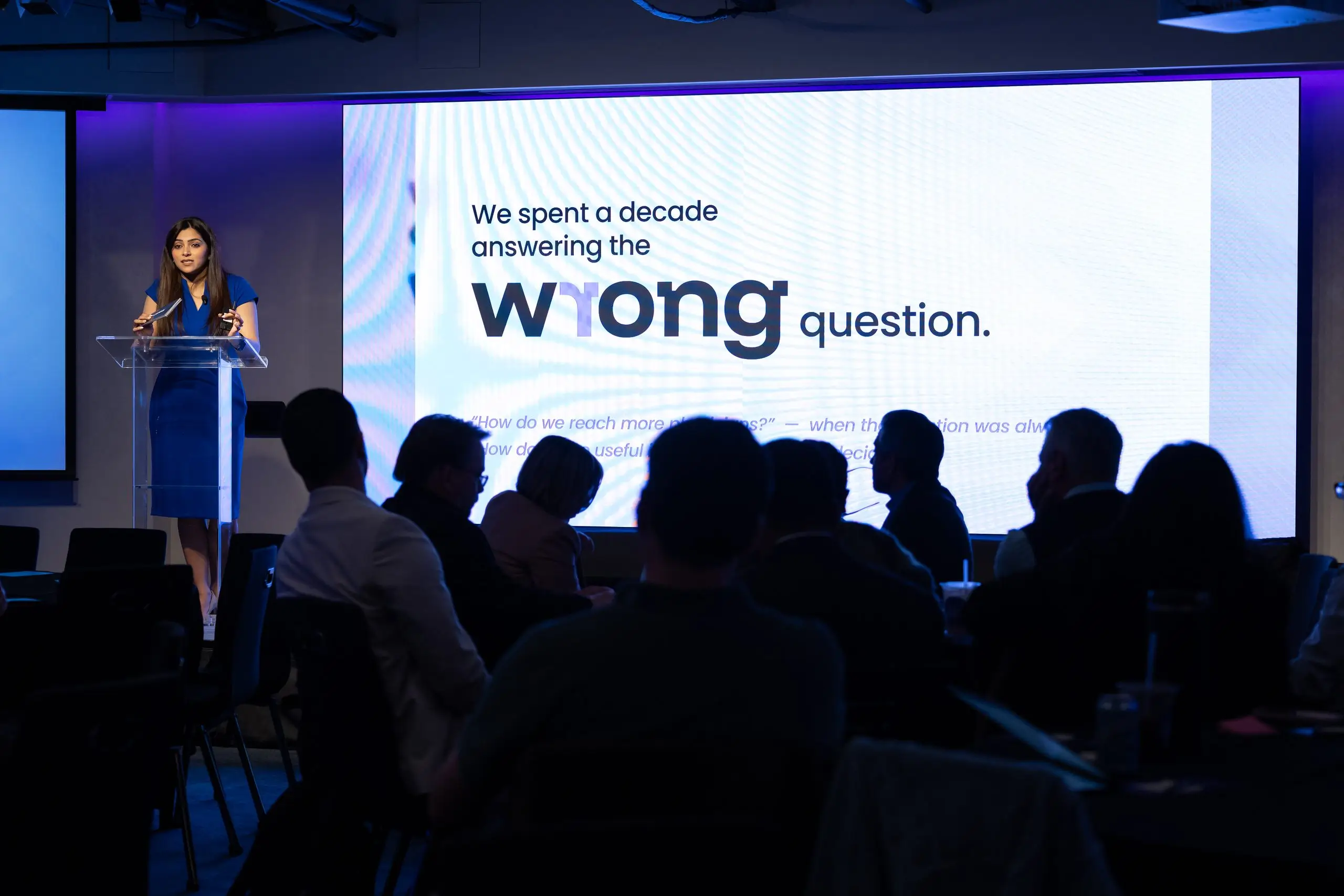
The Makers’ impact was also felt in the branding of the platform itself. Its name was decided by an end-of-day vote that saw them choose “Daily Command” over “Daily Intel” and “Daily Workspace.”
Overall, the response in the room to Daily Command was borderline euphoric. “Every category-defining software company in enterprise has been built on the same insight: Own the surface where the work actually happens. In pharma marketing, that surface has never existed,” said Deerfield chief media officer Bill Veltre. “Daily Command is the most credible attempt I have seen at building it. It’s grounded in real clinical data, designed by the operators who do the work and architected as an open ecosystem rather than a closed AI stack.”
Avalere Health chief media officer Jeff Erb put it even more succinctly. “This is a big deal.” Avalere and Deerfield are two of Doceree’s five beta partners for Daily Command, and have immediate access to the platform.
Daily Command’s industry-wide launch is scheduled for July 14. The full list of Makers – the 75 media, agency and brand-team leaders who contributed to the Health Decode live build – can be accessed here.
A “Manifesto” and More
The rest of Doceree Health Decode was devoted to content designed to contextualize the thinking behind the creation of Daily Command. The event kicked off with Jain’s keynote, during which he laid out a “Maker’s Manifesto.” Key tenets included: “We build for the moment of clinical decision – not the moment of media impression,” “We treat AI as a craft – not a costume” and “We build in the open, with the people who will use it.”
Jain also emphasized the importance of the role that the Makers would play over the course of the next several hours. “Today, we will co-create,” he promised. “You’ll see how everything has come together to address the frustrations you highlighted, the opportunities you highlighted… We want you to see how [Daily Command] will be useful for you, your clients and the patient we want to reach.”
Elawadhi offered a second keynote during the event’s second act, which presented a wealth of information and opinion that framed the need for a platform of Daily Command’s breadth and ambition. In her presentation, “The Decade That Rewired the Prescription,” Elawadhi traced today’s healthcare data environment back to the shift from paper to digital – which, she explained, started the industry on its path to becoming machine-readable.
“Every layer became measurable – and once it was measurable, it was changeable,” she added.
Elawadhi also outlined three changes that, she believes, pharma marketers and media leaders must effect as quickly as possible. They need to shift from campaigns to companions (“stop launching campaigns, start building presences physicians actually want around”), from reach to relevance (“stop measuring how many you reached, start measuring how many you helped”) and from attribution to participation (“stop counting who you influenced, start earning the right to be part of the decision itself”).
“The brands that make these shifts will own the next 10 years,” she said.
Next up was a panel discussion moderated by Doceree EVP and GM, global data and AI products and partnerships Julius Ramirez and featuring Veltre, Avalere Health chief strategy officer Ryan Mason and CMI Media Group group SVP, engagement strategy Matthew Gunther. “From Mass Reach to Meaningful Moments” attempted to fully assess the ways AI has changed commercial teams during the last half-decade, as well as predict what AI-native pharma companies might look like a few years from now.
Some of the sharpest exchanges came when Ramirez asked the panelists to complete the sentence, “The pharma commercial teams that will win by 2028 will be the ones who…” Veltre responded, “…change their job descriptions to make sure AI and data management are part of what they do.” Gunther countered with “…can work effectively in a dynamic, decision-based system,” while Mason replied, “…are obsessive about making relevance a reality.”
The panelists also diverged on responses to a question about the biggest myths around AI in healthcare, with Mason pointing to “the notion that we can efficiency our way to success” and Veltre simply noting “that everyone’s using it.” Gunther, for his part, emphasized the need for pharma to catch up in the areas of internal structure and education.
The thought-leadership component of Doceree Health Decode concluded with a fireside chat hosted by Doceree chief business development officer Vijay Adapala and featuring Latham Thomas, founder and CEO of maternal health organization Mama Glow. Thomas, an author of two books and a visiting professor at Brown University, shared the twists and turns of her path from self-employed doula to the leader of a health company (and its charitable foundation).
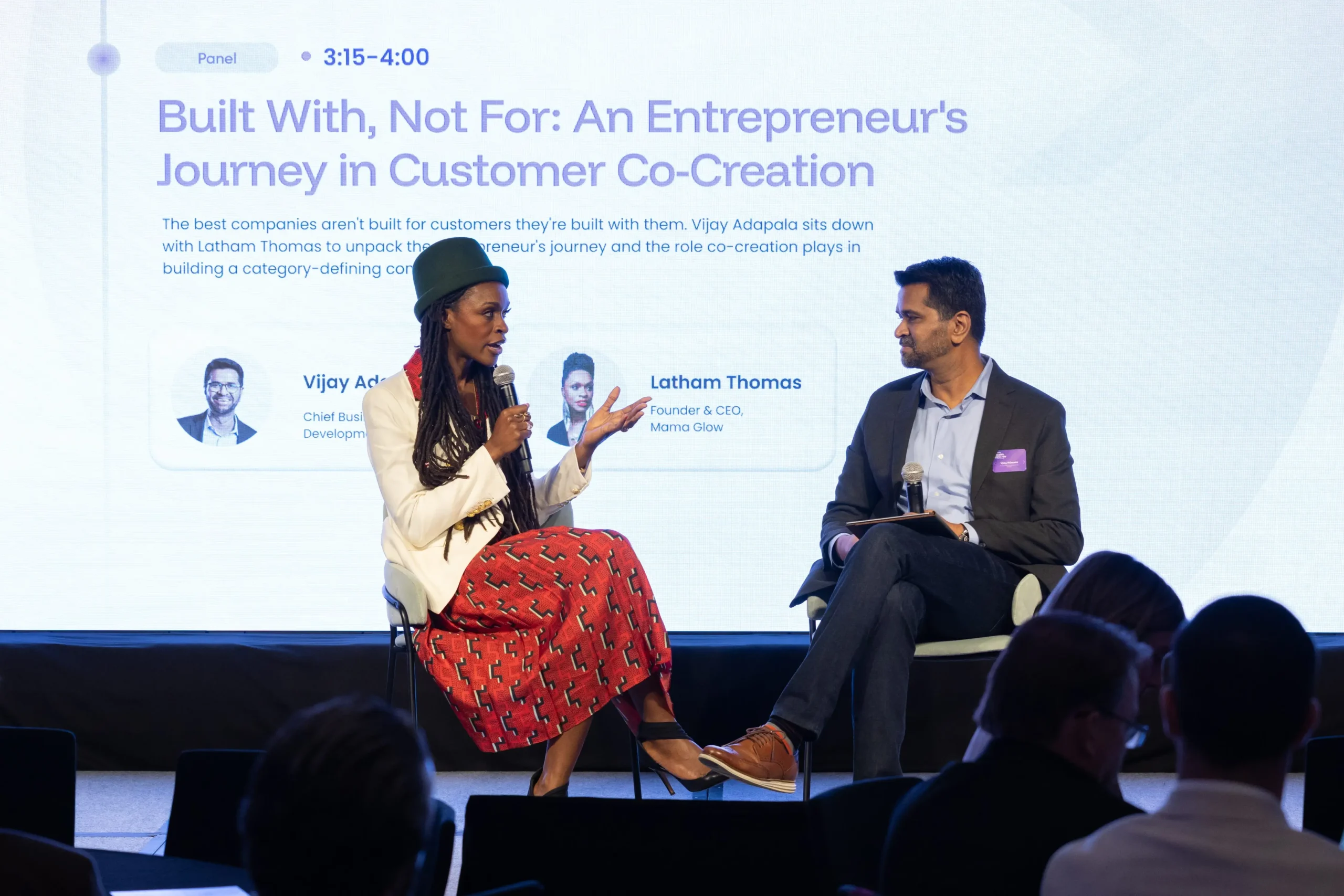
The journey involved becoming comfortable working alongside large, sometimes unwieldy organizations, ranging from CVS Health to the Mount Sinai Health System to Anthem Blue Cross Blue Shield (for which she helped design a doula benefit for employees of the federal government). “You’re working with institutions that are a Titanic in size, and you’re like a little steamboat,” she recalled. Her approach ultimately succeeded, and then some: Mama Glow’s community has expanded to include more than 3,000 doulas across the United States and six continents.