



















Inside the new clinical AI search reality: HCP use is outpacing pharma strategy
New research from Varn Health x Beacon reveals that more than half of HCPs already use AI tools in their professional workflow.

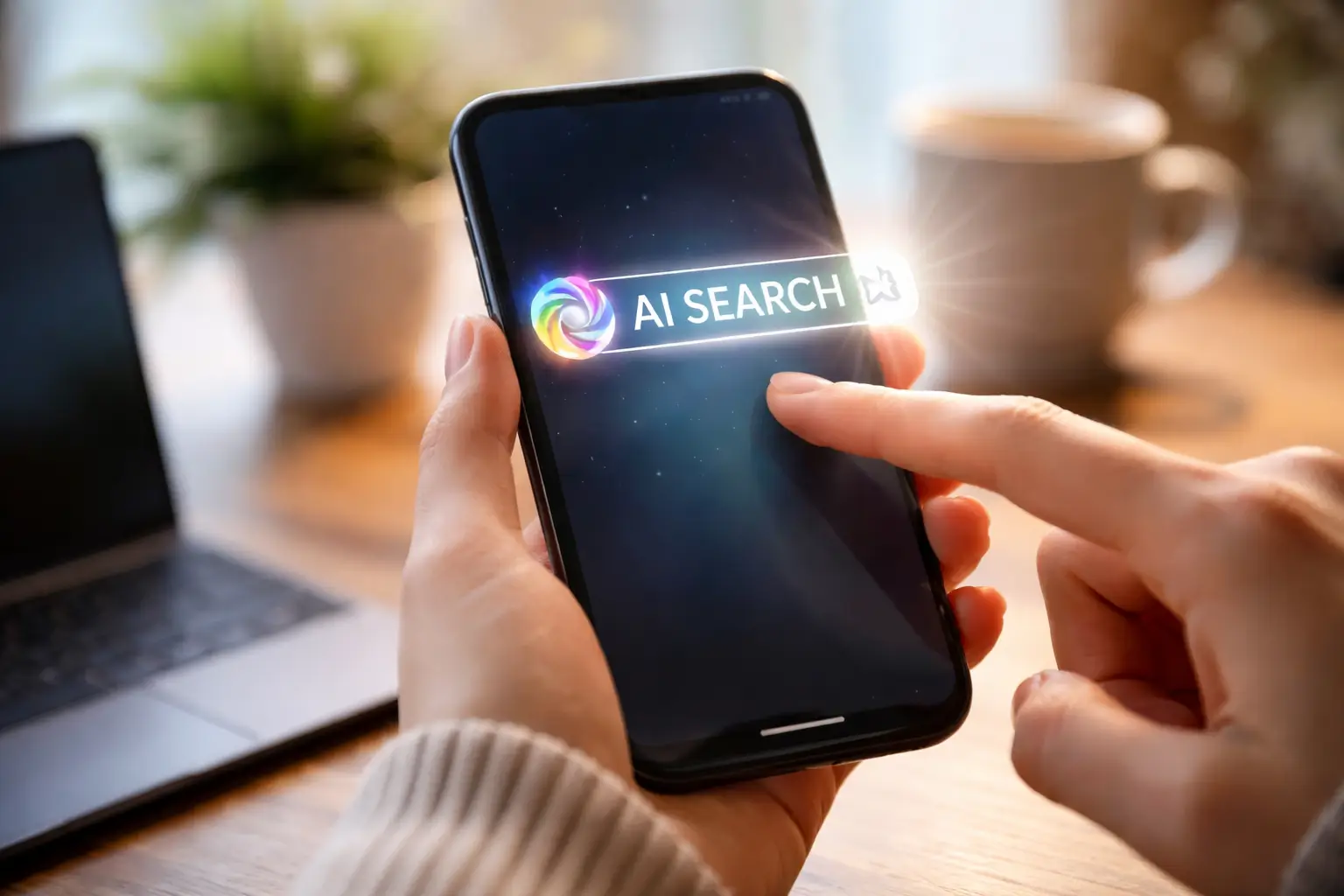
AI search is creating tension in pharma marketing: healthcare professionals are adopting it fast, and brands are under pressure to innovate compliantly. Fresh research from Varn Health x Beacon reveals the scale of shifting HCP behaviour.
AI search in pharma – mind the visibility gap
In pharma organisations, teams are working carefully within regulatory boundaries, and digital discovery strategies remain focused on established practices. Meanwhile, healthcare professionals are moving in a different direction, and fast.
For a growing cohort of clinicians, generative tools are becoming a routine interface for professional queries. If your content isn’t architected for this new layer of exchange — generative engine optimisation (GEO) — it’s effectively invisible. Or perhaps more critically, your brand may be visible, but stripped of context and authoritative sourcing. Present, yet not in control of the narrative.
As HCPs migrate toward generative search, pharma must rethink what it means to be findable. The emerging model relies on machine-readable architecture: structured data, semantic clarity, and claims that can be parsed without ambiguity.
New data on how HCPs use AI search
As 2026 shapes up to be a defining year for pharma marketing, we commissioned new research from Beacon to understand how AI search behaviour is evolving among healthcare professionals.
We surveyed 126 verified HCPs across disciplines, from primary care physicians to consultant specialists in oncology and dermatology and asked a straightforward question: Are you using AI search tools in your professional life?
The answer should give pause for thought. More than half of HCPs said they already use AI search tools professionally. A further 18% plan to adopt them soon. What was, until recently, experimental behaviour is fast becoming routine.
Clinicians cited a wide range of applications:
- Accessing clinical guidelines
- Reviewing drug information
- Exploring diagnostic pathways
- Summarising research reports
- Locating patient-facing materials
The shift appears to be generational, notes Varn CEO Tom Vaughton. “The next wave of AI adoption is heavily driven by the 25-34 age group. Adoption is not coming from the top down, but from the younger ranks up.”
The young HCP perspective on AI tools
Early AI adoption will be driven by tech-native, younger clinicians. We were curious to understand more about what they see in these tools, and what worries them.
Secondary research published in the Journal of Medical Internet Research (JMIR Infodemiology) suggests a nuanced picture. Among the Young Working Group for the World Federation of Public Health Association, GenAI tools are widely perceived as potential relief for administrative pressure, clinical data management and patient education.
Documentation support and rapid summarisation attract particular interest. In stretched health systems, efficiency gains carry professional appeal. If current limitations are addressed, young HCPs say AI tools could contribute to more effective health promotion, risk communication and public health education.
Alongside this optimism sits a clear awareness of risk. Concerns focus on inaccurate outputs, the circulation of misinformation, the ethical use of vulnerable populations’ data, and the risk of amplifying existing biases embedded in training datasets.
The role of content strategy
For pharmaceutical brands, these concerns have direct relevance. Content that is precisely referenced, clearly authored and structurally coherent stands a stronger chance of accurate representation within AI-generated summaries.
The debate around AI misinformation intersects with content strategy. Source integrity and machine readability influence how clinical information travels within AI-mediated environments, with ambiguity increasing the risk of distortion.
The conversion opportunity in pharma GEO
AI search offers a new discovery pipeline: a clinician queries a tool, receives a synthesis, and moves directly into action, often via an EHR portal or prescribing system. And machine agents (agenetic AI) are simultaneously becoming key intermediaries in digital journeys.
Pharma marketers who still conceptualise search as top-of-funnel awareness risk missing the opportunity. The funnel has collapsed. The AI layer now operates between question and action. If you aren’t optimising for it, algorithms, not your brand, control the narrative.
Architecting health content for generative search
Generative engine optimisation in pharma begins with a simple premise: treat AI assistants as a primary audience. While we don’t need to write for robots at the expense of humans, it’s vital that machines can accurately interpret, contextualise and cite your claims.
Structured content
Schema markup and robust structured data help AI systems parse medical claims without error. Defined terminology, EEAT principles, and consistent citation support accurate contextualisation. In regulated sectors, these practices align closely with existing compliance disciplines.
Extractable answers
Identify common queries and structure your answers to be ‘chunks’ of content that allow easy extraction by AI systems. This includes “What is X? X is…” style answers, and bullet points, number lists or tables.
Discoverable assets
If a clinician asks, “What are the NICE guidelines for managing moderate to severe psoriasis?”, the AI system must be able to identify authoritative, up-to-date content and understand its relevance. Content buried behind PDFs, inaccessible scripts or vague headings is unlikely to surface.
Omnichannel presence
Orchestration across channels is still essential. The journey might begin with a voice query — “Hey Assistant, what are the NICE guidelines for…” — and end with a prescription decision inside an EHR. The objective is gaining influence at the point of decision.
Relevant metrics
Visibility must be defended. As AI-generated summaries answer queries directly, brands are facing declining click-throughs even when they are cited. Monitoring citation frequency, sentiment and positioning within AI outputs becomes as important as tracking rankings once was.
Professional benchmarking
Pharma marketers also need to know if their competitors are already winning the “Share of Model” (AI citations) and take informed steps to defend their organic search visibility as traditional “blue link” traffic declines.
Future-proofing for AI search in pharma media
Success today requires moving to meet the physician where they are: in the AI search layer. There is currently a prime opportunity to establish early authority in generative AI for pharma marketing.
Competitive advantage depends on how frequently and accurately a brand appears within generative outputs. Early movers have begun to secure consistent citation across clinically relevant queries. Others face declining share of voice as AI systems consolidate attention around structurally robust sources.
Assessing performance in the zero-click search era demands updated metrics. Brands can evaluate citation patterns, analyse representation within AI responses and benchmark against competitors. An AI visibility framework offers a structured approach to this analysis.
The opportunity is considerable. Generative systems are not replacing expertise; they are mediating access to it. For pharmaceutical companies willing to invest in generative engine optimisation, the prize is sustained visibility at the precise moment of clinical curiosity.
Stephanie Mackay-Stokes is the Strategy Director at Varn Health, expert SEO, GEO, and data agency working globally within the healthcare, pharma, and biotech sectors.