
























AI and the Power of Peers: How Technology Is Rewiring Physician Trust
With 9 in 10 doctors now using AI tools, technology is reshaping how medical knowledge moves - but peer collaboration remains the most trusted source of healthcare insight

AI Has Officially Entered the Exam Room
Artificial intelligence is no longer the next big thing in medicine. It’s already here, woven into the daily rhythm of clinical practice. What began as experiments in data analysis and automation has evolved into a widespread, everyday resource for physicians across specialties. From reviewing patient records to identifying relevant clinical studies, AI has become a behind-the-scenes engine that helps clinicians process information faster and more efficiently than ever before.
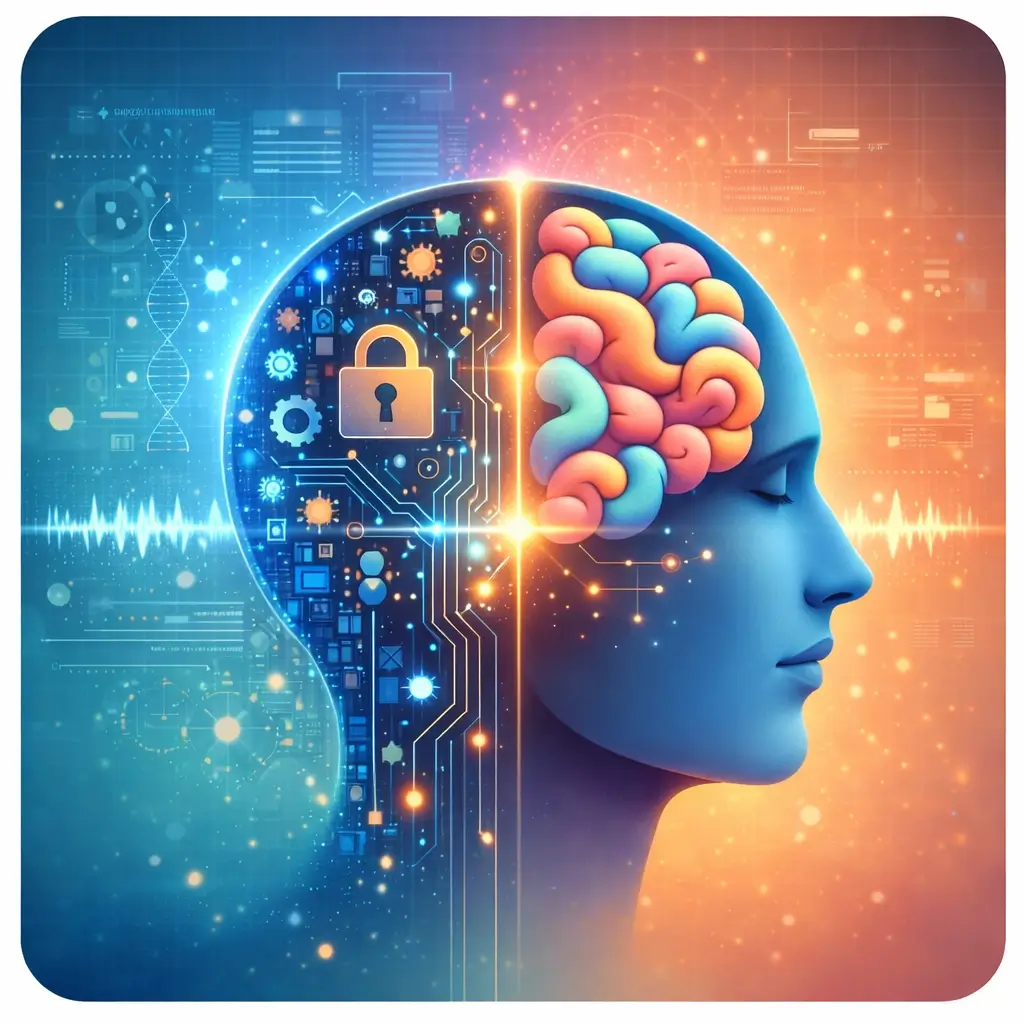
Its impact is visible not just in what physicians do, but in how they think and collaborate. Medical information that once took hours to locate and interpret can now be summarized in seconds. Yet, amid this wave of digital acceleration, something notable is happening. Rather than diminishing the human side of medicine, AI is creating new space for it.
Recent Sermo RealTime insights capture this transition clearly: while digital tools are now indispensable, physicians continue to rely on one another to validate, contextualize, and act on the insights these systems deliver. AI accelerates knowledge, but trust is born from human connection.
The New Clinical Co-Pilot
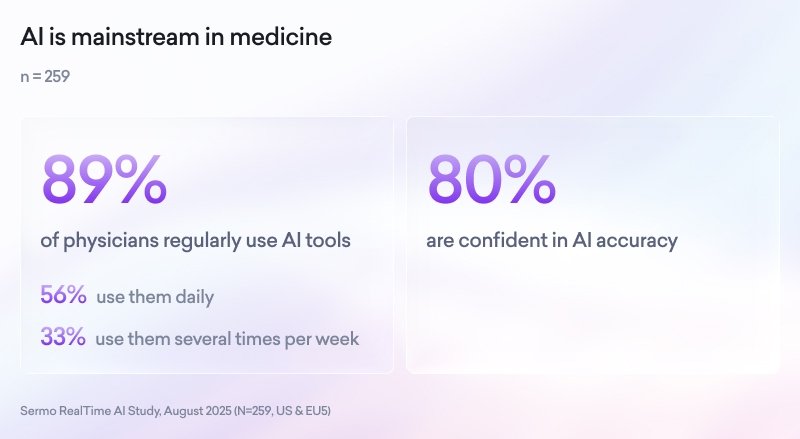
AI in healthcare has officially gone mainstream: 89% of physicians reported using AI-powered tools to support their clinical work. Among them, 56% use these tools daily, and another 33% several times per week. What was once a novel technology tested in limited settings has now become a routine fixture in modern medicine.
This level of adoption marks a clear shift from experimentation to integration. AI has become part of the standard operating fabric of clinical practice. It is not replacing expertise but reshaping how physicians access and interact with information. AI tools are used to condense complex research, surface relevant studies, and summarize patient data in real time, helping doctors navigate a constant influx of knowledge more efficiently.
Confidence in these systems is also high. 80% of physicians say they trust the accuracy of AI-generated medical information. With that degree of trust, AI has moved from being a supplementary reference point to a core element of clinical reasoning, influencing how physicians learn, analyze, and communicate insights.
Balancing Trust with Caution
Even with strong adoption and confidence levels, physicians remain aware of the risks that come with integrating AI into clinical workflows. The top concern cited by 42% of physicians is the risk of inaccurate or misleading information. Another 22% worry about potential over-reliance on AI instead of clinical expertise, and 12% cite a lack of transparency in how AI systems generate their responses.
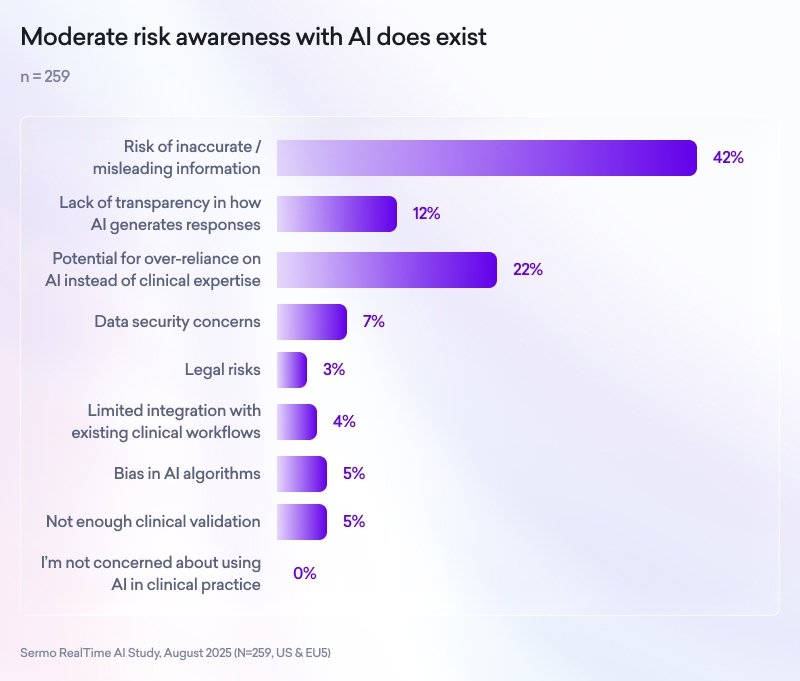
While physicians trust AI’s usefulness, they are simultaneously calling for greater clarity, validation, and accountability in how AI outputs are produced and applied. The data reflects a profession embracing innovation with open eyes, optimistic about the benefits but mindful that reliability and transparency remain essential to patient safety.
How AI Is Changing the Way Doctors Search
Alongside its clinical applications, AI is transforming how physicians search for and consume medical information online. The familiar process of typing a query into Google, scrolling through a list of search results, and comparing multiple sources is being replaced by AI-driven summaries that synthesize findings instantly.
These summaries allow for a faster, more organized starting point for learning. Instead of manually reviewing multiple sources of information, physicians can access key takeaways in a concise, structured format, saving time by highlighting the most relevant information.
Two major patterns of search behavior are emerging:
The AI-Reliant Searcher
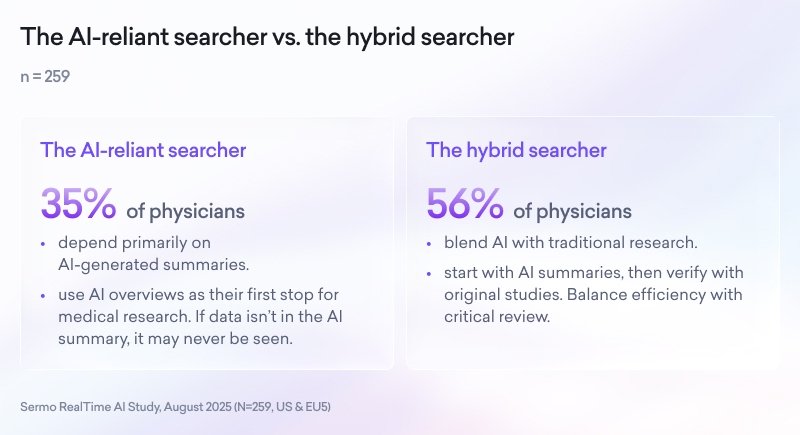
35% of physicians now depend primarily on AI-generated overviews, engaging less frequently with traditional search results. For these clinicians, AI has become the first stop for professional research, a way to obtain context quickly and identify insights efficiently. If an article or data point isn’t captured in an AI summary, it risks being overlooked entirely.
This shift underscores how critical it has become for medical content creators to ensure that data and publications are accurately represented in AI-generated summaries. The way information is structured, from clarity of abstracts to data tagging, now directly affects visibility.
The Hybrid Searcher
56% of physicians take a blended approach. They start with AI summaries for orientation, then turn to traditional search results or original studies for confirmation. This “trust but verify” mindset reflects a cautious confidence: AI provides the foundation, but human expertise still completes the picture.
This hybrid model highlights that AI isn’t replacing independent evaluation. Instead, it’s streamlining the path to it, allowing physicians to reach understanding faster without compromising diligence.
The Enduring Influence of Peers
Even as AI becomes a trusted source of clinical insight, physicians continue to rely heavily on one another for decisions that affect patient care. When it comes to medication information, peers are the most trusted source by a wide margin.
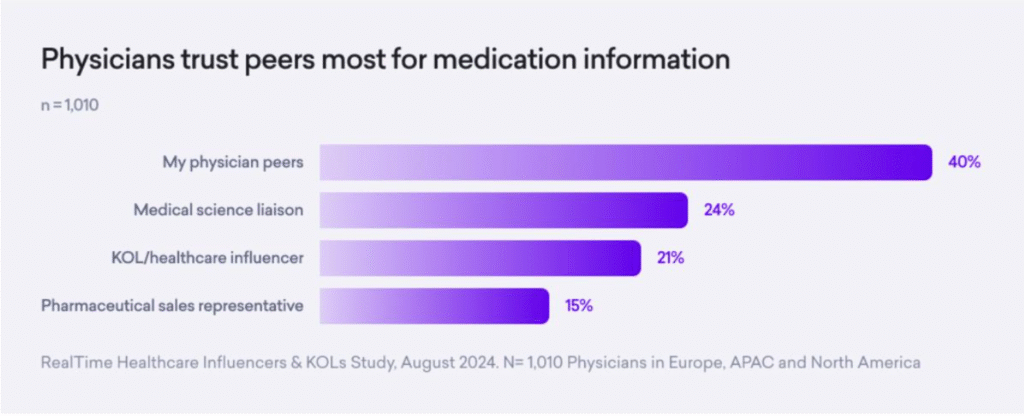
Within this trust hierarchy, physician peers hold a unique and dominant position, largely because they provide practical, firsthand insight that resonates with everyday clinical reality. While theory is essential, it’s the application in practice that truly matters. Colleagues understand the nuances of managing a patient with multiple comorbidities or navigating the frustrating maze of payer approvals for a new therapy. They can offer advice on addressing patient adherence issues that a textbook or algorithm simply can’t capture.
While Medical Science Liaisons (MSLs) and Key Opinion Leaders (KOLs) are highly respected for their deep scientific expertise, fellow practicing physicians are often seen as more trusted. They share the same daily challenges and can contextualize new evidence in a way that even sophisticated AI, for all its processing power, cannot. This indispensable peer exchange remains the bedrock of clinical confidence.
AI and Peers: A New Kind of Collaboration
Rather than competing for attention, AI and peer discussion are fueling each other.
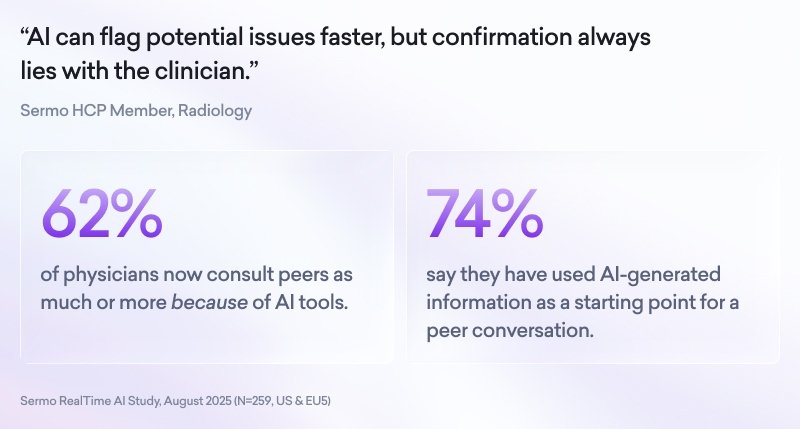
62% of physicians now consult peers as much or more because of AI tools. Even more striking, 74% say they have used AI-generated information as a starting point for a peer conversation.
The relationship between AI and peer expertise showcases how technology can complement, rather than replace, human expertise. Physicians often begin their discovery process with an AI-generated summary to get a rapid overview of complex topics like new clinical guideline updates or emerging therapeutic options. Armed with this foundational knowledge, they then turn to their trusted colleagues to interpret the insights.
It’s in these peer discussions that the data gains context, as clinicians consider how new findings apply to specific patient populations or align with real-world practice. This dynamic ensures that AI acts as an amplifier for the human network, prompting valuable conversations, encouraging peer review, and fostering a culture of shared learning. This virtuous cycle strengthens both the accuracy of information and the confidence behind clinical decisions.
Looking Ahead: The Balance of Intelligence
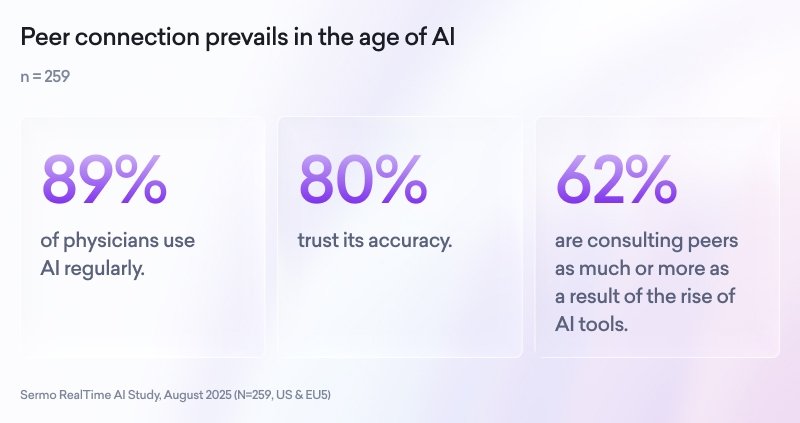
AI tools are now a consistent part of daily clinical activity, while peer discussion continues at equal or greater levels. High usage and strong confidence coexist with active collaboration, showing that physicians combine digital and interpersonal sources of medical information in parallel.
The study shows a consistent trend across adoption, trust, and communication metrics: AI speeds up knowledge access, but peers supply the context and shared understanding that ground clinical decisions. Together, both elements define how physicians engage with medical knowledge today — one accelerating discovery, the other providing clinical, real-world context.
Interested in learning more about AI in healthcare? Reach out anytime to business@sermo.com