

















What the First Wave of solli Elevate Honorees Tells Us About the Future of Pharma Media
Here's the inside story of how 12 young leaders are elevating a range of functions and approaches within pharma media

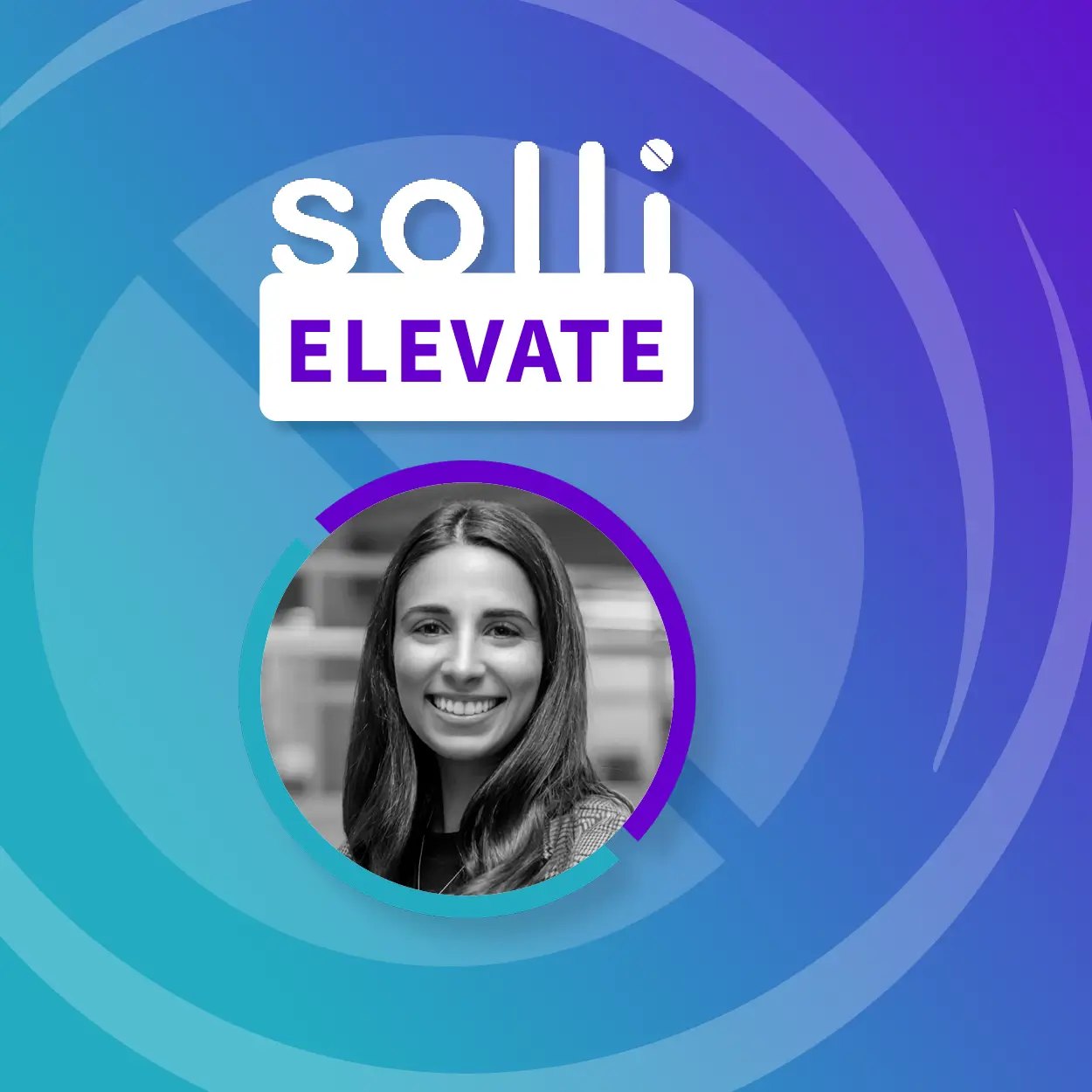
When we announced the imminent debut of solli Elevate in early June, we weren’t sure what to expect. Our goal was to showcase the up-and-coming leaders set to usher pharma media into the future – but frankly, we weren’t sure we’d be able to pull it off. That’s because such individuals are in higher demand now than ever before, and we thought their employers might not be too keen on having their many virtues trumpeted to the competition.
That proved to be less of a hurdle than anticipated and the nominations rolled in. Here, then, are our top takeaways from six months worth of solli Elevate profiles.

“Outsiders” bring energy and unconventional thinking…: Pharma media is packed with people who found their way into the business largely by chance. Bristol Myers Squibb director, worldwide media and planning, HCP, Nadia Khatri, PhD, majored in classical history and took her first industry job, as an assistant media buyer at a direct response marketing firm, almost out of curiosity.
After completing a retail leadership development program, PatientPoint director, client solutions Jane Wojcik managed an AT&T store. Allison Mudd, director, client success and strategy, digital media at Veradigm, spent her formative post-grad years working a range of theater gigs. Less than a decade later, both are ascendant in their organizations – and both characterize their early professional experience as invaluable to their career arcs.

As Genentech director, media, strategic partnerships and innovation, digital marketing Gozde Dinc put it in the inaugural solli Elevate profile: “I don’t know a lot of computer scientists and engineers in pharma marketing…It wound up being right for me.”
…but more and more people view pharma media as a first-choice career track: Dentsu Health director, paid search Matt Brown studied marketing, communications and media studies in college and dove right into a search associate job after graduation. Doceree business director Jessica Rourke immediately put her marketing degree to work in a traffic coordinator role at CommonHealth Adient. Once more, with feeling: There’s no one “right” way to prepare for a career in pharma media.
Collaboration is a cheat code: One would think that, given the number of moving parts in even a rudimentary pharma campaign, clients and agencies would have clearly delineated practices for effective collaboration. This, alas, remains more the exception than the rule – which makes individuals like Khatri, who wrote her dissertation on the importance of collaboration, invaluable to any pharma or healthcare organization hoping to move at the speed of digital media. Which is to say: All of them.

Media gigs are going global: When CMI Media Group VP, global Matt Durham arrived at his first agency job, he found himself baffled by the literal territoriality of the media business. “If you were an agency in the UK, you focused on UK media. If you were an agency in Germany, you focused on German media,” he recalled.
Durham may well be the first person in pharma media to have specifically been entrusted with a global role, but he won’t be the last. Look for the industry’s eminent media agencies to push for a greater presence in Europe (France, Germany and Spain top most lists), Canada and South America.
Measurement isn’t a niche job: Too many media programs fail to stick the landing, and far too often that’s due to mangling the measurement piece of the assignment. Whether by failing to specifically define what constitutes success or by relying on vanity metrics, there’s no better way to come off as a non-serious steward of client budget than by offering thin after-the-fact reporting.
That’s why it’s heartening to see a pair of young Pfizer leaders – senior managers, media measurement and optimization Brynne Colella and Julianne O’Connell – attack the measurement challenge with vigor and flair. The two of them and their teammates push to attend meetings of the company’s consumer insights and business analytics groups, believing that’s the best way to glean information which can add context to a measurement story. This will become a best practice among in-house teams sooner than later.

Under-considered functions are a breeding ground for top talent: Mesmerize senior director of client success Andrew Weintraub likens his role to that of a quarterback or orchestrator. Epocrates director, product management Michelle Berg adeptly balances the need to evolve products and platforms with the demands of users who like them just the way they are. The two of them have found opportunity and joy in jobs once thought to be a grind at best and thankless at worst. Others are sure to follow in their footsteps.
Sweating the details pays dividends: Mention “process” in certain media settings and eyes start to glaze over. But IPG Mediabrands director, digital partnerships Kate Rafferty is among a new generation of process aficionados who have won over their peers with a clear-eyed focus on operational discipline.
Indeed, by expending considerable time and energy on infrastructure, Rafferty’s team has created an environment that thrives on the consistency that comes with it. “The goal is to use the same process for [Amgen blockbuster] Otezla as we do for a brand that has a $50,000 plan,” she explained. It’s long past time for the industry to get its infrastructural act together.
Data is the connective tissue: If this somehow wasn’t clear during the pre-AI era, it certainly is now. With that realization – grudging in some cases – has come a need for more analytics-minded leaders like Rourke, whose professional worldview is based upon the maxim that “data speaks louder than opinions.” Will more health media-adjacent organizations similarly value the sanctity of the yottabytes of data they have at their immediate disposal? They better, lest that the AI revolution pass them by.
This generation of pharma leaders does some seriously cool stuff when off the clock: Durham, a Spanish Civil War enthusiast, wrote a biography of British commander Sam Wild. Colella built a walk-in closet with custom cabinetry in her house. Dinc always wants “to have visited more countries than [her] age”; she recently added Albania to her list. Mudd helps workshop new theatrical productions during her time away from the office. Rourke has achieved Level 2 certification from the Wine & Spirit Education Trust (WSET).
So yeah, the 12 young leaders showcased in solli Elevate would be equally good company at a pharma media event or at a dinner party. The industry is richer for their presence.
After this week, solli Elevate will take a short break and return on Wednesday January 14. To nominate a candidate for an upcoming profile, click here. Many thanks for your support of the series over the course of the last six months – here’s to a warm and restful holiday season.